






Bridge Inspection ROV: A Practical Guide to Inspecting Piers, Foundations, and Scour
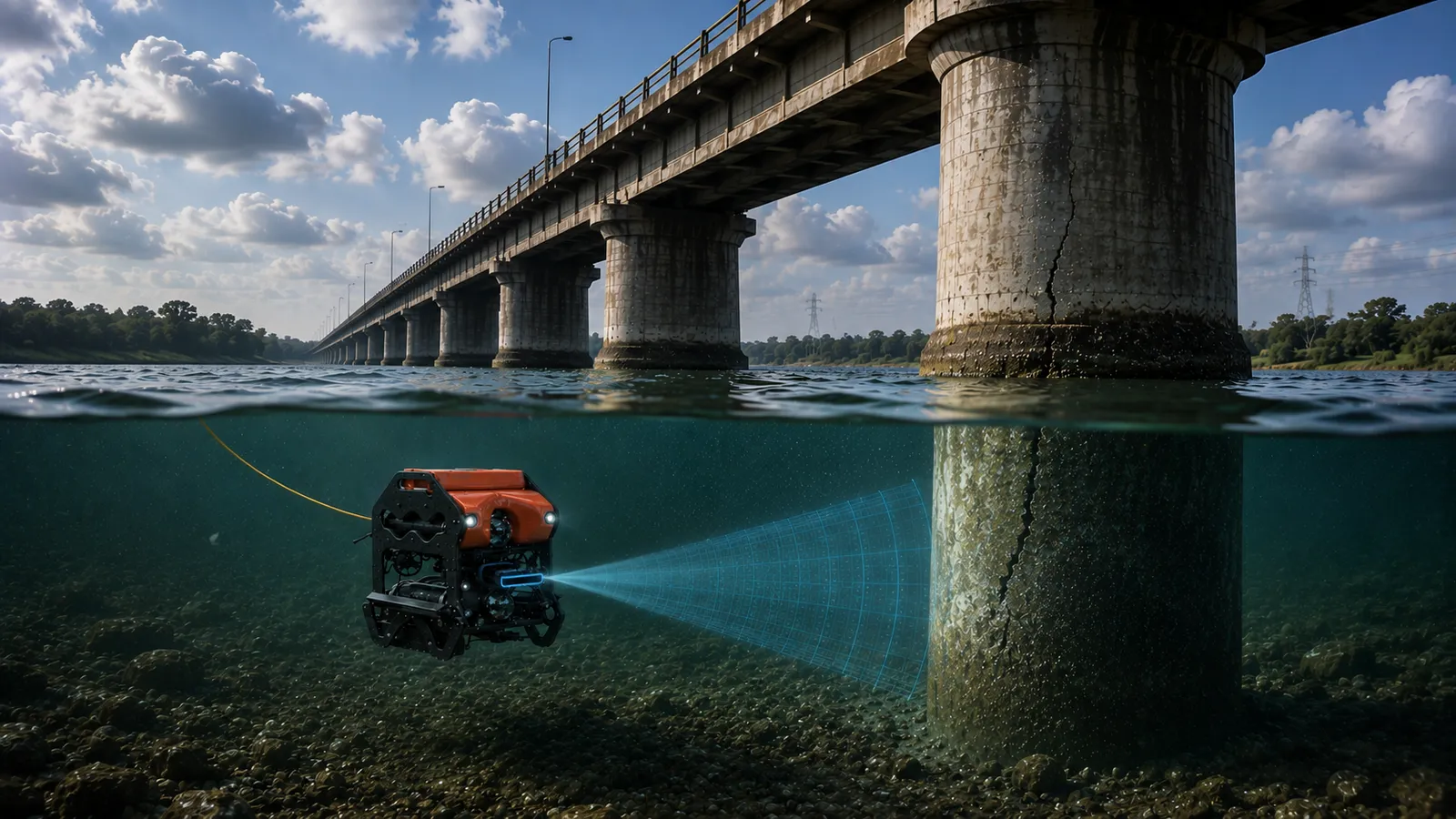
A bridge inspection ROV surveys piers, foundations, and scour without pausing traffic or dewatering. See how the workflow runs on Indian river bridges.
Indian Railways operates over 1,47,000 bridges. Of these, 37,689 are more than a century old, and all follow the same inspection regime as newer structures. Most cross rivers, which means part of every foundation sits underwater. A bridge inspection ROV closes the visibility gap. It is a tethered underwater vehicle we pilot from the bank or the deck to survey piers, foundations, and the riverbed around them, without pausing traffic or dewatering the site.
Why Bridge Inspection Programmes Need an Underwater Layer
Aging bridge stock is not an Indian problem alone. International research on bridge inspection identifies submerged structural components as the least examined and most degradation-prone parts of any river-crossing asset (Panigati et al., 2025). In India, the Savitri river bridge collapse of August 2016, which took dozens of lives during monsoon flooding, showed how quickly scour and undermining can turn a routine finding into a disaster. The twice-yearly regulatory inspection cycle at Indian Railways bridges was designed exactly for this class of risk (Minister of State for Railways, Lok Sabha reply, 2018). Adding an underwater layer to those inspection windows closes the single largest blind spot in current bridge health monitoring.
How Bridge Foundations Are Inspected Today
Diver-based inspection is the established method for underwater bridge work in India, and it remains the standard for detailed, hands-on assessment. Trained teams enter the water in planned windows when current, visibility, and depth are safe, and they carry out close visual survey, tactile check, and sample collection at piers and abutments. Their record is accepted by every major bridge-owning authority.
Practical constraints do apply. Diving works best when current is low, visibility is workable, and depth is within safe limits. This usually means scheduling around monsoon peak and pre-planning access at every pier. In rare cases, temporary cofferdams hold back water for specific dry NDT work, but this stays an exception rather than a routine step.
How Bridge Inspection ROV Surveys Work
Our ROVs bring a different toolkit to the same problem. Angled thrusters hold position against river current at a pier face for as long as the survey needs. A Full HD or 4K camera with zoom, lit by controllable LED lights, gives the operator a clear view in dark water. When the water turns turbid, side-scan and forward looking multibeam sonar keep working when the camera cannot. Side-scan sonar picks up small changes in riverbed shape, which is the exact signature of scour or debris build-up beginning to form under a pier.
Every survey produces documented output. Video and sensor data are geo-tagged with position and depth. Post-inspection analysis in EVAP flags likely defect zones in the footage. 3D point clouds and photo mosaics let engineers compare the same pier face across inspection cycles year on year. This kind of visual comparison has been difficult to produce with diver-based inspection alone.
For most Indian river bridges we cover in a two-stage sweep. A wide-area sonar and camera pass first, to map the whole span and locate anomalies. A close-in inspection follows at every anomaly and every high-risk zone, such as piers in fast current or piers with a known scour history.
The GPS-Denied Navigation Challenge
GPS does not work underwater. Radio signals attenuate within centimetres of the surface, which is why every underwater positioning system relies on sound instead. On open water, a technique called USBL uses an acoustic transducer on the survey vessel to measure the ROV’s position relative to the vessel’s own GPS-fixed location. Close to bridge structures, where the deck blocks satellite reception and pier surfaces produce acoustic reflections (a problem called multipath), the ROV switches to onboard sensors. An inertial navigation system tracks acceleration, heading, and rotation, paired with a Doppler velocity log that measures ground speed against the riverbed. Together they maintain a continuous position fix without any surface reference.
What Bridge Inspection ROV Surveys Detect
Six anomaly categories account for most bridge foundation findings. Scour at piers and abutments is the top-priority finding: the streambed around the foundation eroded away by fast-flowing water, and the first warning of undermining risk. Spalling, cracking, and exposed reinforcement show up on concrete substructure elements after decades of service. Leaching, mortar loss, and general concrete degradation appear on older masonry piers, particularly on bridges over a century old. Debris build-up around piers matters because it widens the effective pier width and can hide scour developing beneath. Coating breakdown and corrosion take priority on steel piles and welded joints. Where required, ultrasonic thickness measurements and ACFM (alternating current field measurement) checks quantify remaining material and the condition of underwater welds.
How ROVs and Diver Teams Work Together
Neither method replaces the other. ROV inspection is fastest for wide-area survey work, mapping every pier across a large span, and reaching sections where current or depth exceeds safe diver limits. Diver inspection remains the standard for hands-on tactile assessment, sample collection, and fine-detail NDT at pre-identified locations. In the working bridge inspection programmes we support, our ROV runs the first-pass survey to identify anomalies across the span, and the diver team follows with targeted physical assessment at the flagged locations. This split reduces the time divers spend in the water while keeping the assessment record complete for regulatory purposes.
Flood-Risk Context
Bridges matter most during floods, when evacuation and disaster logistics depend on them. Floods are also what damages them fastest. In India, monsoon runoff drives both the pressure on the structure and the scour erosion at its base. A pre-monsoon inspection cycle confirms a bridge is fit for the coming season. A post-monsoon inspection quantifies the damage. Sonar-based ROV survey works even in the poor visibility typical of Indian rivers during and immediately after monsoon, which extends the inspection window beyond what diver-based surveys alone can cover.
Bridge Inspection ROV in the Indian Regulatory Context
Indian Railways policy is twice-yearly inspection: one pre-monsoon check and one detailed post-monsoon check (Minister of State for Railways, Lok Sabha reply, 2018). Underwater assessment fits both windows well. A sonar-and-camera pass timed to each cycle keeps inspection coverage consistent across the network. NHAI and state PWDs run bridge audit cycles at longer intervals, with exceptional inspection standard practice after major monsoon events. In every case, ROV inspection produces the timestamped video and position-logged records that regulators expect as documentation.
EyeROV in Bridge Inspection Practice
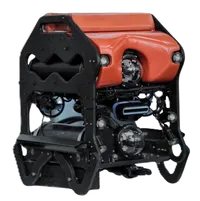
We build our ROVs in India and deploy them across defence, oil and gas, hydropower, and infrastructure sectors. For bridge inspection work in Indian rivers, our TUNA ROV covers the majority of pier and foundation surveys within the depth range typical of road and rail bridges. Post-inspection analysis runs through EVAP, our visualisation and analytics platform, which maintains the year-on-year comparison record and defect log across inspection cycles.
Frequently asked questions
What does a bridge inspection ROV do?
A bridge inspection ROV surveys the submerged parts of a bridge, including piers, abutments, foundations, and the riverbed around them. An operator pilots the tethered vehicle from the bank or deck, capturing HD video, sonar imagery, and geo-tagged findings without pausing traffic or dewatering the site.
Can an ROV work in high-current river conditions?
Yes, within limits. ROVs with angled thrusters hold position against river current up to roughly 3 knots, which covers most Indian river bridges outside monsoon peak flow. In extreme current, inspections are scheduled around low-flow windows, the same way diver-based inspections are.
How often should bridge underwater inspection be done?
Indian Railways policy is twice yearly: one pre-monsoon check and one detailed post-monsoon check. Road bridges under NHAI and state PWDs follow varied cadences from annual to five-yearly. Post-flood exceptional inspection is standard practice for river-crossing bridges after major monsoon or seismic events.
How does an ROV navigate under a bridge without GPS?
GPS signals cannot penetrate water and are blocked by the bridge deck above. ROVs use acoustic USBL positioning where a surface reference is available, and switch to onboard inertial navigation paired with a Doppler velocity log close to piers, maintaining position without any surface signal.
Is ROV inspection accepted by Indian regulators for bridge work?
ROV surveys produce the timestamped video, position-logged anomaly records, and written reports that Indian Railways, NHAI, and state PWDs expect as inspection documentation. In the working programmes we support, ROV inspection sits alongside diver inspection rather than replacing it, and both records enter the audit trail together.
Conclusion
The blind spot below the waterline is the largest one in any bridge inspection programme, and a bridge inspection ROV survey is the most efficient way to close it. If you run a bridge network in India and are planning your pre-monsoon or post-monsoon inspection cycle, we can scope a deployment for your assets. Talk to our team at EyeROV about scoping a bridge inspection deployment, or read our guide to underwater dam inspection and how ROV inspection works across infrastructure types.