






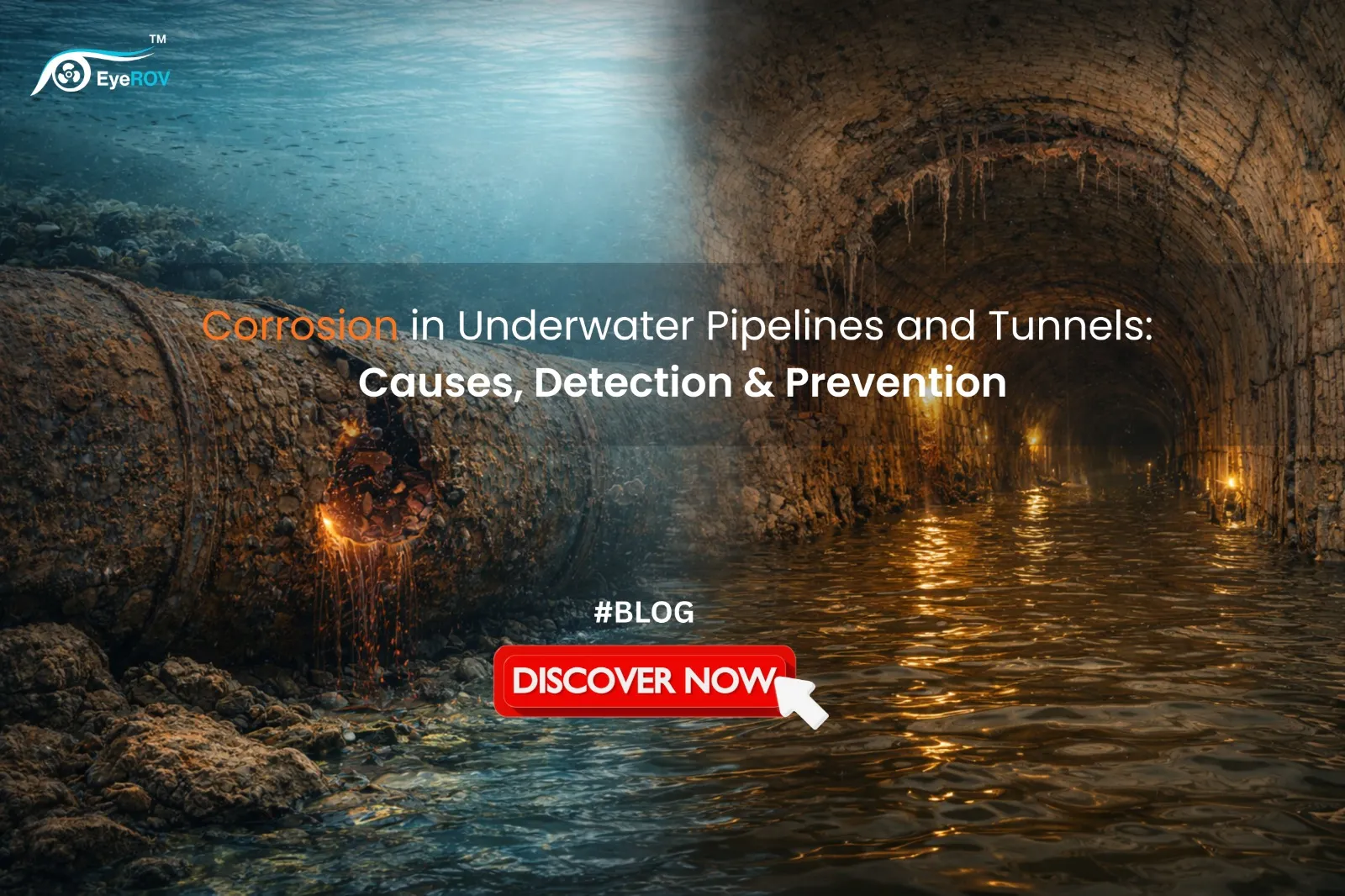
Corrosion in Underwater Pipelines and Tunnels: Causes, Detection & Prevention
Corrosion in underwater pipelines and tunnels is a constant, hidden threat. Learn how it develops, why risks differ, and how ROV-based inspections enable proactive integrity management.
Beneath the Surface, Deterioration Never Stops
Bridges are visible.
Refineries are visible.
Power stations are visible.
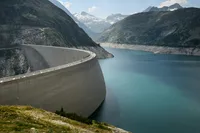
But some of the most critical infrastructure operates where visibility ends, inside submerged pipelines and deep underwater tunnels.
These systems transport water, regulate hydropower, cool industrial processes, and sustain marine operations. And while they work silently, corrosion works silently with them.
It is not dramatic.
It is not immediate.
But it is constant.
To manage it effectively, we must recognize that underwater pipelines and underwater tunnels are not the same, and neither are their corrosion risks.
Pipelines vs. Tunnels: Similar Environment, Different Behavior
Underwater pipelines are pressure-retaining metallic systems. They face internal fluid chemistry, external seawater exposure, pressure cycles, and flow-induced erosion. Even localized corrosion in a pipeline can reduce wall thickness enough to compromise pressure integrity.
Underwater tunnels, on the other hand, are large structural systems, often reinforced concrete or steel-lined, operating under gravity or controlled flow. Corrosion here affects reinforcement bars, embedded steel components, gate grooves, and seating plates. It may appear gradual, but intervention is typically far more complex due to access constraints.
These structural differences shape how corrosion develops and how it must be inspected.
What Causes Corrosion Underwater?
In submerged pipelines, corrosion is primarily electrochemical. Water acts as an electrolyte, accelerating metal loss when protective systems degrade. Common triggers include:
-
Coating breakdown
-
Cathodic protection failure
-
Chloride-induced pitting
-
Microbiologically influenced corrosion (MIC)
-
Erosion-corrosion in high-flow zones
In tunnels, deterioration often stems from:
-
Chloride ingress attacking reinforcement
-
Carbonation leading to steel depassivation
-
Sediment accumulation creating oxygen-differential zones
-
Persistent moisture and poor ventilation
In both cases, corrosion progresses out of sight, beneath silt, behind scaling, inside welds.
The Real Effect: More Than Just Rust
Corrosion is not just surface discoloration. It changes structural behavior.
In pipelines, it can lead to wall thinning, crack initiation, leakage, and ultimately rupture risk. Even small pits significantly reduce burst strength in pressurized systems.
In tunnels, corrosion causes cracking, spalling, cavity formation, and mechanical misalignment. Gate groove degradation can affect sealing performance. Sediment buildup can accelerate localized attack and alter hydraulic efficiency.
The impact is structural, operational, and financial.
Why It Often Goes Undetected
Managing corrosion underwater is not simply a materials issue, it is a visibility issue.
Traditional inspection methods struggle with:
-
Near-zero visibility
-
Long confined geometries
-
Diver safety limitations
-
Limited bottom time
-
Inconsistent documentation
Without measurable and repeatable data, corrosion management becomes reactive.
This is where advanced ROV systems play a critical role.
The Role of ROVs in Corrosion Management
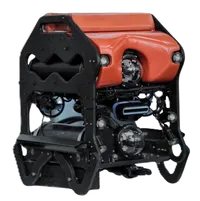
Modern inspection-class ROVs are not just underwater cameras, they are mobile measurement platforms designed for submerged infrastructure.
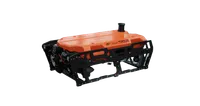
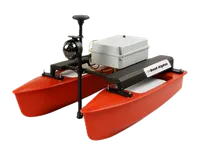
Compact systems like EyeROV TUNA (500 × 400 × 500 mm, 25 kg, depth rating up to 300 m) allow maneuverability inside pipelines, ship hulls, and confined tunnel sections. Larger platforms like SAGARAand TSROV support extended, externally powered operations in larger structures.
More importantly, ROVs integrate diagnostic payloads that quantify corrosion rather than simply observe it:
-
UT Probes measure actual metal thickness and calculate percentage wall loss.
-
CP Probes assess cathodic protection effectiveness.
-
ACFM sensors detect surface-breaking cracks in weld seams without removing coatings.
In large-scale UT campaigns, thousands of measurement points can be recorded, tabulated, and compared against original design values, turning corrosion into structured data.
From Footage to Insight
Inspection today is not just about capturing video. It is about processing and interpreting data.
Through platforms like EVAP (EyeROV Visualization & Analytics Platform), inspection results are transformed into:
-
Digital reports
-
AI-supported defect detection
-
Criticality-based analytics
-
Enhanced imagery in turbid water and sonar data
This enables repeatable inspection cycles and trend monitoring, the foundation of predictive integrity management.
A Measured Way Forward
Corrosion in underwater pipelines and tunnels is inevitable.
But catastrophic failure is not.
The real risk lies in limited visibility, incomplete coverage, and irregular monitoring. When inspections become structured, measurable, and repeatable, uncertainty reduces, and engineering decisions improve.
Because beneath the surface, deterioration does not pause.
And awareness, supported by advanced ROV inspection and measurable data, remains the strongest defense.