





Flooded Member Detection ROV: The Simple, Complete Guide
A complete guide to flooded member detection ROV inspections, covering how they work, which technologies are used, and why it matters for offshore safety.
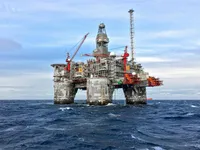
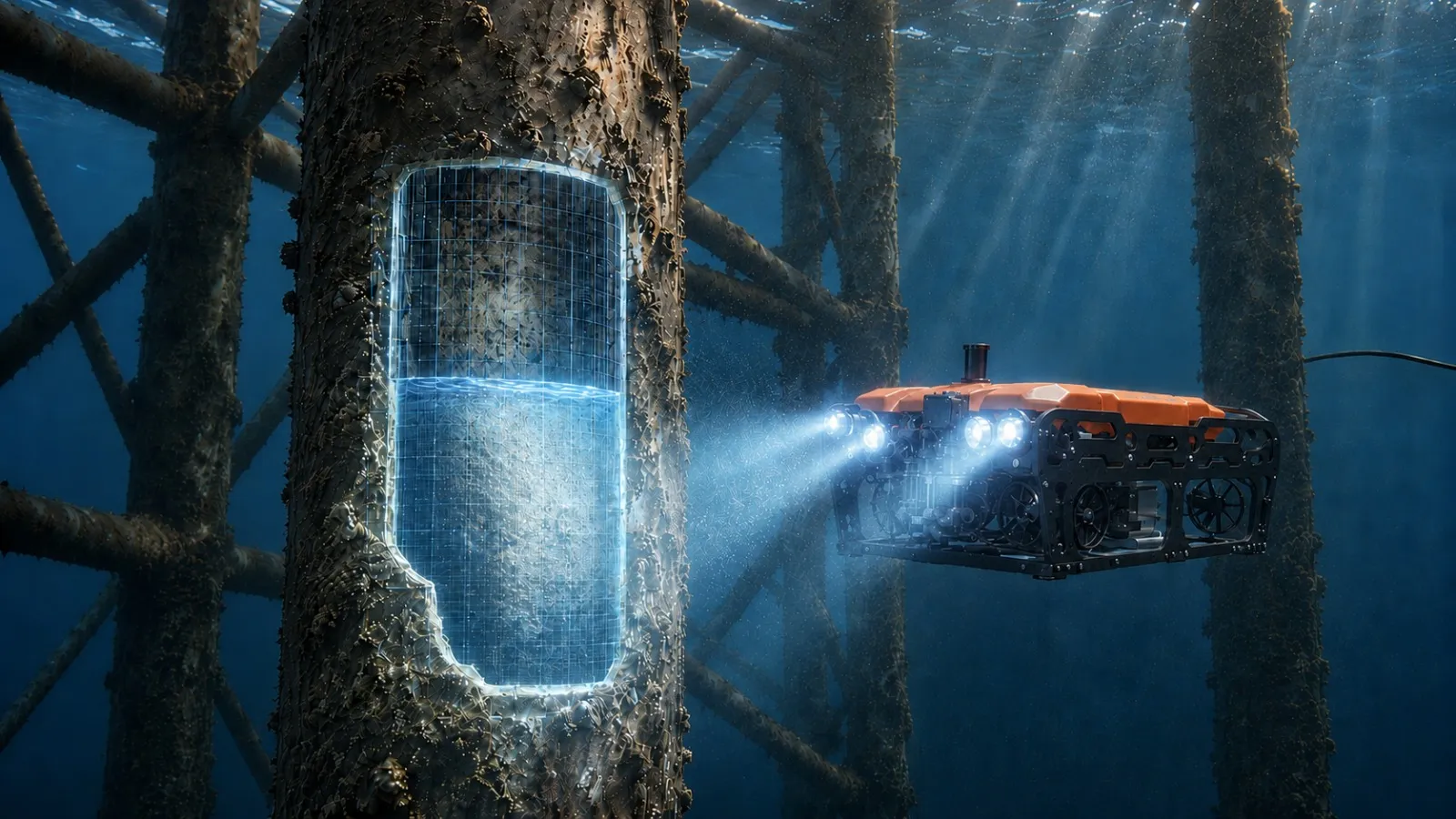
Offshore platforms are built with hollow steel legs and braces meant to stay filled with air, keeping the structure light and strong. Over time, a crack, a rusted spot, or a broken weld can let seawater leak inside, making that spot heavier and weaker with no way to see the damage from outside.
Flooded member detection ROV inspections solve this problem. An underwater ROV carries a sensor that can tell whether a sealed steel member is dry or flooded, without cutting it open. This guide covers what FMD is, the tools used, how the inspection works, and one idea most guides leave out.
What Is Flooded Member Detection (FMD)?
FMD answers a simple but serious question: is this underwater steel member still full of air, or has it filled with water? Platform legs, braces, and similar parts are sealed shut on purpose to stay buoyant and spread weight properly.
If water gets inside one of these parts, it almost always means something is wrong, such as a crack, corrosion, or a failed weld. Since this happens on the inside, you cannot spot it just by looking at the structure. FMD gets around this by using sensors that can effectively see inside the member from the outside.
Why Flooded Member Detection Is Critical
A flooded member is more than extra weight. It means the structure has lost a support point, so nearby joints and braces work harder to compensate. Structures with few backup support paths can suffer badly from even one flooded member, while heavily braced platforms handle it better, which is why engineers read results alongside the platform’s overall design, not as a simple pass or fail number.
Because a flooded member usually points to a hidden defect, FMD is often the first check before a repair or life extension plan for an aging platform. Many regulators require regular FMD surveys, since it is one of the few ways to check a structure’s inside condition without opening it up.
FMD Technologies Compared
Three main tools are used. Ultrasonic Testing (UT) sends acoustic signals into the steel and reads what bounces back, since sound behaves differently through water than air. It is accurate but needs a clean surface, so marine growth can slow it down. Acoustic Resonance Technology (ART) does not need to touch the member. It reads how the member vibrates to tell if water is inside, works through marine growth and coatings, and some versions estimate how much water is present. Gamma Radiography places a radioactive source and detector on either side of the member, since water blocks more radiation than air. It works through thick coatings but involves extra safety rules.
There is no single best choice. The right one depends on surface cleanliness, marine growth, comfort with radioactive equipment, and whether a wet or dry answer is enough, or a water level reading is needed.
How ROV-Based Flooded Member Detection Works
Once the right sensor is chosen, it is attached to the ROV on an adjustable frame that can grip different sizes of steel members. The pilot moves to each inspection point using a plan based on the platform’s actual structural drawings, not guesswork.
To save time and cost, inspections do not always test every member. Many surveys check a set percentage, say 30 percent, and estimate the rest from those results and past history. Full surveys are usually kept for higher risk platforms, after major storms, or for detailed life extension studies.
At each point, the operator notes the reading along with the exact location and depth. Once done, the readings are combined into a report and a map showing which members are flooded, ready for the platform’s safety assessment.
Applications of Flooded Member Detection
FMD is not only used on oil and gas platforms. It also serves FPSOs, subsea pipeline supports and buoyancy tanks, offshore wind foundations, naval and defense structures such as piers and mooring systems, and underwater civil structures including bridge piers and tunnel supports. Wherever a sealed, air filled steel part helps hold up an underwater structure, FMD has a role to play.
Advantages of Using ROVs for Flooded Member Detection
ROVs reach depths that would be unsafe for divers, removing a major safety concern. Sensor readings do not vary person to person, so results can be reliably compared year after year. ROVs also cover more members per trip, and some methods need little surface cleaning, saving time and money. Many FMD sensors work on an ROV or with a diver, so operators are not locked into one option.
Key Considerations Before Conducting an FMD Inspection
Pick the right tool for the conditions, since marine growth or thick coating usually favors ART or gamma over contact based UT. Confirm the structural drawings are current, decide how much to inspect based on risk and history, watch fewer-backup-path platforms closely, and match the report format to your regulator’s expectations.
Beyond Periodic Surveys: Permanent FMD Monitoring
Most FMD guidance focuses on periodic surveys done every few years. Permanent monitoring gets far less attention, yet it uses sensors fixed onto a member that continuously send back readings instead of waiting for the next scheduled trip. This suits members already known to be a concern, or remote platforms where sending an ROV team is expensive and slow. It will not replace full surveys, since fitting sensors on every member is not practical, but as an early warning option for the highest risk spots, it is worth knowing about.
The Future of Flooded Member Detection
FMD sensors are getting smaller and better at estimating partial flooding rather than a simple wet or dry answer. Inspection software is also improving, combining FMD readings with video, sonar, and corrosion data into one record, so engineers can track how a structure changes over several years.
Improving Offshore Asset Integrity with Advanced ROV Inspections
Keeping an offshore structure safe depends on accurate inspections, timely data, and reliable underwater technology. ROV-based flooded member detection helps operators spot problems early and make better maintenance decisions. It is one part of the broader field of ROV inspection, and platforms like EyeROV’s SAGARA are built for this kind of demanding, deep water work.
Strengthen Offshore Inspections with Reliable ROV Technology
Pairing the right sensor with the right platform is what makes flooded member detection ROV inspections reliable over the long run. EyeROV’s inspection data can be combined with EVAP for clear reporting and analytics, giving engineers a complete picture from raw reading to actionable report.
Discover how EyeROV’s Oil & Gas inspection services help protect offshore infrastructure. Explore EyeROV’s ROV solutions, learn more about what an ROV is and how it works, or contact us to find the right platform for accurate, safe, and efficient offshore inspections.
Frequently Asked Questions
What technologies are used for flooded member detection?
The three main methods are ultrasonic testing, acoustic resonance technology (ART), and gamma radiography. Each checks for water inside a sealed member in a different way, through sound reflection, vibration patterns, or radiation levels, and each works better in some conditions than others.
Which offshore assets require FMD inspections?
Fixed platforms, jackets, caissons, FPSOs, offshore wind foundations, subsea pipeline supports, and even structures like bridge piers all rely on sealed, air filled parts, which makes them good candidates for FMD. See our Oil & Gas inspection services for more on offshore applications.
How often should offshore structures undergo FMD inspections?
This depends on the structure’s age, how harsh its environment is, and what regulators require. Many programs run FMD every few years, with extra checks after storms or known incidents. High risk members can also be fitted with permanent sensors for monitoring between full surveys.
How does flooded member detection support asset integrity management?
FMD points out which members have a developing problem before it becomes serious, so engineers can plan repairs, focus on the platform’s weakest points, and extend its working life based on real data. Our ROV inspection team can help build this into a broader asset integrity program. Contact us to get started.