








We Found Something Unusual at 204 Metres: A New Methane Seep in the Bay of Bengal
A rare early-stage methane seep discovered at 204 metres in the Bay of Bengal, triggered by a submarine landslide and confirmed through ROV inspection.
What we found 204 metres below the Bay of Bengal turned out to be something rare: a methane seep in the very earliest stage of its formation, triggered by an underwater landslide that had reshaped the seafloor years earlier. This is the story of how that discovery unfolded, and how ROV inspection was the piece that made it real.
What the Survey Was Trying to Answer
A submarine landslide had been reported at this location in the eastern continental margin of India. A large volume of seafloor sediment had slipped downslope, leaving a visible scar in the bathymetric data. The question was whether that event had opened underground pathways for trapped methane to escape upward.
To find out, scientists combined high-resolution bathymetric mapping, sub-bottom profiling, water sampling, and underwater imaging to understand whether the landslide had triggered methane seepage.
The survey team used a sub-bottom profiler to scan the seafloor from the surface, detecting multiple gas flares rising from within the slumped region. These plumes rose approximately 100 metres above the seabed before fading, never reaching the surface. Water samples were also collected at various depths for laboratory analysis of dissolved methane concentrations.
Everything was pointing toward an active seepage. But pointing is not the same as confirming.
The ROV Goes Down
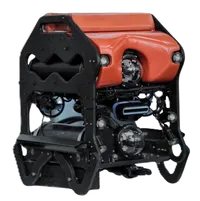
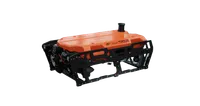
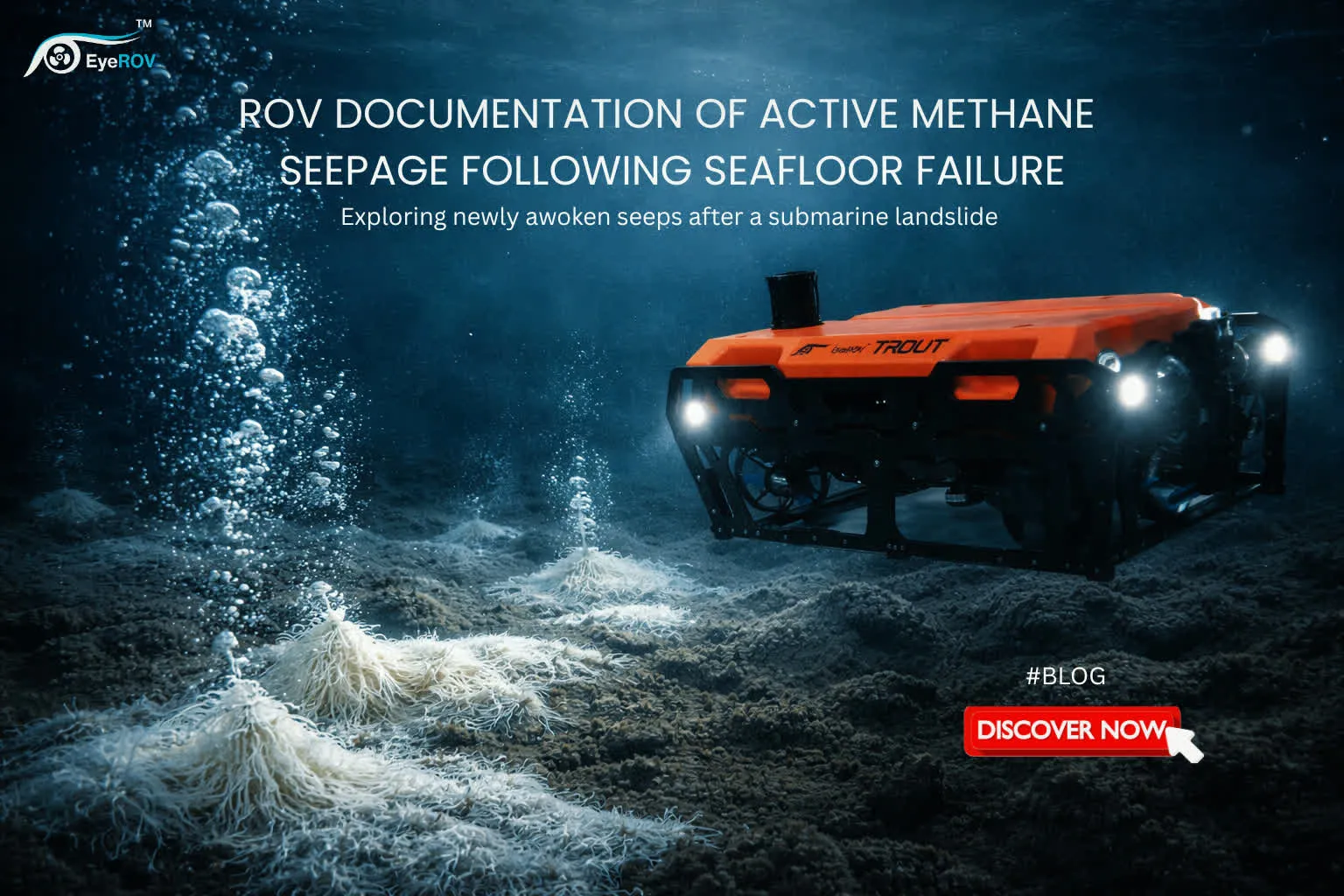
Sagara, EyeROV’s ROV operable at depths in excess of 300+ metres, was deployed over the target zone. It carries forward and downward-looking cameras, a depth sensor, and an underwater positioning system. Piloted via a tether from the surface, it descended to 204 metres and did systematic surveys of the seafloor.
Within no time, the source of bubbles were identified.
Gas bubbles were coming up from the sediment, not in a steady flow but in irregular bursts. The team found four distinct seepage points. Some vents release bubbles every 7 seconds. Others went quiet for up to 26 minutes before releasing again. No pattern, no rhythm. Just methane, escaping from four separate spots on the ocean floor.
This was the confirmation the survey needed. The gas flares detected from the ship above were not data artefacts. They were real, active methane seeps, and now we could see it.
Life Had Already Arrived
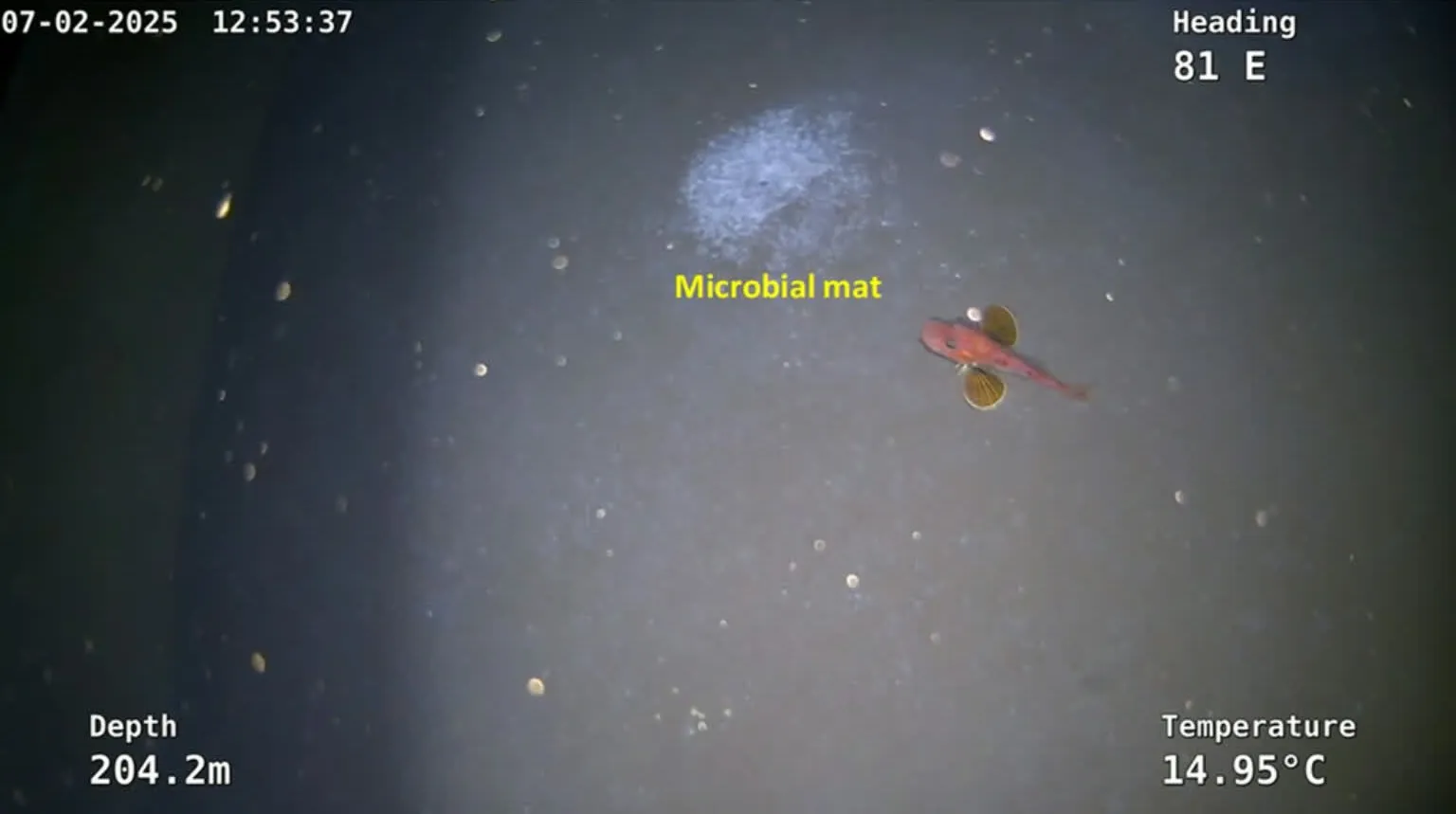
What showed up around the vents was, in some ways, the most interesting finding of all.
Dense white filamentous material was spread across the sediment surrounding each seepage point. These are microbial mats, colonies of bacteria including sulfur-oxidising species like Beggiatoa and Thioploca, as well as methane-oxidising bacteria. They do not need sunlight. They live off the chemicals coming up from below.
Their presence told us the seepage had been going on long enough for an entire bacterial community to settle in and grow. The gas was not a one-time release after the landslide. It was sustained, and life had already found it.
The ROV also spotted demersal fish from the Triglidae family near the site, which fits with what you would expect around a biologically active environment.
One important point: this is not yet a mature cold seep ecosystem. It is in an early, nascent stage. The microbial mats are present, but a fully developed chemosynthetic community does not exist here yet. The seepage appears to have started less than a decade ago. What we found is the beginning, not the finished article.
What the Numbers Said
The ROV guided the placement of sediment cores directly at the active venting points. This matters because seep environments are spatially small. A sample taken even a short distance from the active zone tells a different story.
The landslide that started all of this occurred between 2009 and 2015, based on historical bathymetric surveys going back to 2002. The resulting scarp stretches about 186 metres, and local water depth changed from less than 30 metres to more than 200 metres. That shift removed the overburden pressure that was keeping the methane in place and opened the pathways it is now escaping through.
Why the ROV Was Essential
The sub-bottom profiler, CTD casts, and sediment cores all contributed to this discovery. Each one added a piece. But none of them could show what was actually happening on the seafloor. They pointed. The ROV looked.
During the mission, EyeROV Sagara:
- Confirmed active methane bubbling with real visual evidence
- Identified all four seepage points
- Documented the white microbial mats
- Recorded Triglidae fish at the site
- Guided sediment sampling to exactly the right locations
- Recorded and submitted HD video documentation for scientific validation
That footage is now part of the permanent scientific record of this site.
Every other instrument told us something was probably happening. The ROV showed us what it looked like.
Why It Matters
Finding a methane seep this early in its development is uncommon. Most sites are only discovered after they have been active for a long time. Getting to observe one that started less than a decade ago gives researchers a chance to study how these systems begin, not just how they look once they have matured.
The shallow depth of 204 metres is a detail with significant implications. Methane is roughly 20 times more potent than CO2 as a greenhouse gas, so determining whether these emissions are reaching the atmosphere and in what volume is a priority. This remains a situation that demands ongoing monitoring.
EyeROV provides advanced underwater ROV inspections and marine scientific survey services across India, the Middle East, and Southeast Asia. If your next survey requires advanced ROV survey capabilities, contact our team.