





7 Types of Offshore Drilling Platforms Every Operator Should Know
Learn about the 7 types of offshore drilling platforms, from fixed structures to FPSOs, and how ROV-based inspection is changing offshore maintenance.
7 Types of Offshore Drilling Platforms Every Operator Should Know
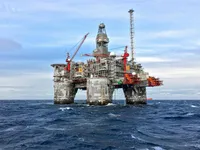
Offshore drilling platforms are structures built over water to extract oil and natural gas from beneath the seabed. They are the operational base for drilling, production, crew operations, and safety systems.
One distinction worth noting: an oil rig is the drilling equipment used to bore wells. An offshore platform is the larger structure that houses that equipment along with processing, storage, and crew facilities. Platform selection depends on water depth, sea conditions, how long the project will run, and budget.
Types of offshore drilling platforms
1. Fixed platforms
Steel or concrete legs anchor these structures directly to the seabed. They are permanent installations, built for water depths up to about 1,700 feet, and work best in stable, shallow environments where production will continue for years.
2. Jack-up rigs
A jack-up rig floats to its location, lowers steel legs to the seabed, and raises the hull above the waterline. These are the most common mobile offshore drilling units. They operate in depths up to 400 feet and can be moved between sites without much difficulty.
3. Semi-submersible platforms
A deck sits on top of columns connected to submerged pontoons. Flooding the pontoons partially lowers the centre of gravity and keeps the structure stable in rough seas. Semi-submersibles work in depths up to 10,000 feet for both drilling and production.
4. Drillships
Purpose-built vessels with a derrick over a moon pool. Dynamic positioning systems hold the ship in place without anchors, allowing operations from 1,000 to over 3,500 metres deep. Drillships are the go-to option for remote frontier exploration.
5. Spar platforms
A deep-draft vertical cylinder hangs far below the surface. Because the centre of gravity sits well below the waterline, wave and current forces have less effect on the structure. Spar platforms operate in depths past 1,000 metres.
6. Tension leg platforms (TLP)
These are floating structures held in place by tensioned steel tendons connected to the seabed. The constant tension limits vertical motion while still allowing some horizontal movement. TLPs work in deepwater production between 300 and 1,500 metres.
7. Floating production systems (FPSO)
Ship-shaped vessels that extract, process, store, and offload oil at sea. Because FPSOs do not need shore pipelines, they have become the standard choice for remote deepwater fields in offshore Brazil, West Africa, and Asia-Pacific.
Fixed vs Mobile platforms at a glance
| Factor | Fixed platforms | Mobile platforms |
|---|---|---|
| Mobility | Permanent | Relocatable |
| Water depth | Up to ~1,700 ft | Up to ~12,000 ft |
| Best use | Long-term production | Exploration and flexible production |
| Cost model | High upfront CAPEX | Lower initial cost, higher day rates |
How offshore platforms are selected
Water depth and sea conditions
Water depth is the first constraint. Fixed platforms stop making financial sense past 1,700 feet. After that, you need a floating structure. In ultra-deepwater, the options narrow to semi-submersibles, drillships, spars, or TLPs depending on wave climate and current patterns.
Project duration and output requirements
If the acreage is unproven, a mobile unit that can redeploy makes more sense. Confirmed fields with long production timelines justify a fixed platform or a permanently moored FPSO. How the oil gets to shore, whether by pipeline or shuttle tanker, also affects the decision.
Cost and logistics
Remoteness changes the cost equation. FPSOs are often the answer in isolated deepwater locations because putting processing and storage on one hull removes the need for separate infrastructure.
What goes wrong during offshore platform operations
Structural wear and corrosion
Saltwater, biofouling, and wave loading wear down jacket legs, welds, riser connections, and mooring components over time. Fatigue cracks in submerged steel can grow for years without anyone knowing, unless there is a consistent underwater inspection programme in place.
Harsh sea conditions
Storms, currents, and changing sea states put mechanical stress on the structure that adds up over the platform’s life. Mooring lines fatigue. Tendons and risers take dynamic loads. These components need periodic checks.
Inspection access in deep and confined structures
Much of the submerged structure on an offshore platform sits in deep water, confined spaces, or areas with poor visibility and strong currents. Reaching these areas for routine inspection has always been operationally difficult. The logistics involved in planning and executing inspection programmes at depth add significant cost.
How offshore platforms are inspected and maintained
Traditional methods and where they fall short
Diver-based inspection has been the standard for examining jacket legs, welds, riser bases, and mooring connections for decades. But divers have depth limits and physiological constraints. Visibility is often poor. And scheduling a full dive operation for routine checks costs more time and money than most operators want to spend.
What ROVs do differently
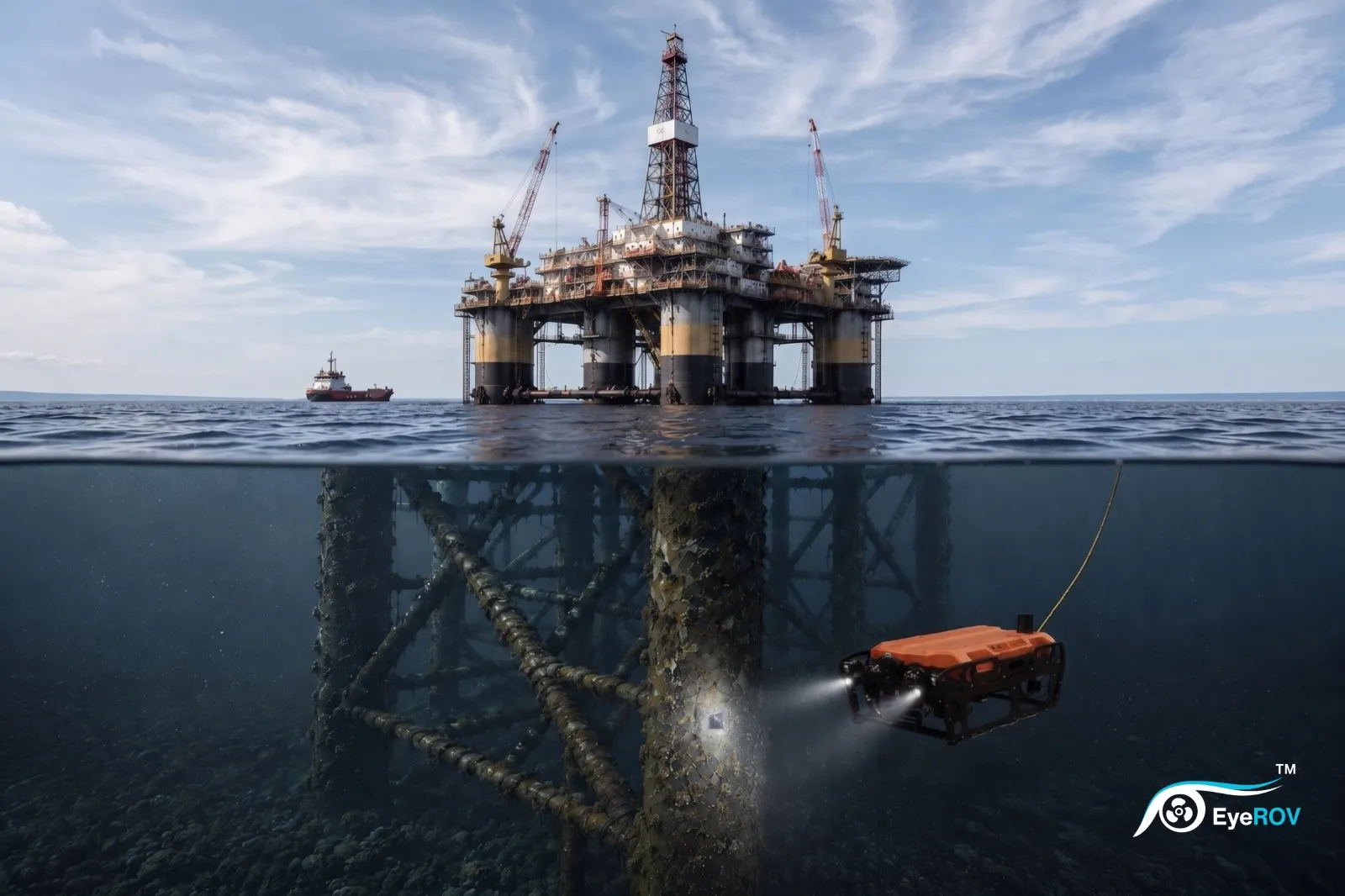
Remotely Operated Vehicles are unmanned submersibles controlled from the surface through a tether. They carry HD cameras, forward looking multibeam sonar, and non-destructive testing sensors, and they can reach confined structural spaces and deepwater components that are too dangerous or too deep for divers.
In a recent offshore deployment, EyeROV’s Sagara ROV completed a full visual inspection of towing chains, smith brackets, columns, weld joints, K-joint welds, cross-bracing, and pontoons on a semi-submersible drilling rig. Under conventional methods, covering those components would have required a multi-day dive mobilisation.
Why operators are switching to ROVs
Nobody goes in the water. A single operator deploys the ROV and finishes in hours what used to take a dive team days. The footage, sonar data, and NDT readings go straight into a documented inspection record. And the platform keeps running because the inspection does not require any operational shutdown.
ROV-based inspection is becoming standard practice
Commercial diving costs have gone up. Asset integrity regulations have tightened. Compact ROV technology has improved. More operators are moving away from diver-dependent inspection programmes, particularly for deepwater and repeat-cycle work.
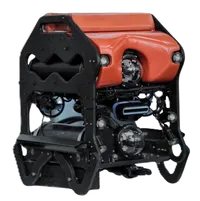
EyeROV’s TUNA ROV has been deployed to assess SPM assemblies, flexible riser hoses, and PLEM components for marine growth, corrosion, and structural defects. The ROV reached points on the structure from angles that would have taken a dive team considerably longer to cover. Inspection data from these deployments is processed through EVAP (EyeROV Visualization Analytics Platform), which applies AI-based image processing to produce regulation-ready inspection reports.
For operators running ageing assets in deep water, the question is no longer whether ROV inspection works. It is whether they can justify not using it.
Conclusion
Each offshore platform type is built for a specific set of conditions, and the choice affects how the field performs over its lifetime. But regardless of platform type, the submerged structure needs regular inspection. Diver-based programmes are becoming harder to justify on cost, logistics, and safety grounds. ROV-based systems are filling that gap.
If you manage offshore infrastructure and want to understand how ROV inspection would work for your assets, talk to the EyeROV team.
To learn more about how remotely operated vehicles work, read our guide: What is ROV? Meaning, Types and How It Works Underwater.
For a detailed look at offshore rig inspection using ROVs, read: Offshore Rig Inspection Using Remotely Operated Vehicles.
Frequently asked questions
What are the main types of offshore drilling platforms?
Fixed platforms, jack-up rigs, semi-submersibles, drillships, spar platforms, tension leg platforms (TLPs), and FPSOs. Each one is built for a different combination of water depth, sea conditions, and project duration.
What is the difference between a fixed platform and a mobile platform?
A fixed platform is anchored permanently to the seabed and used for long-term production in shallow water. Mobile platforms like jack-up rigs, semi-submersibles, and drillships can be moved between locations and operate across a wider range of depths.
Which offshore platform is used in deepwater drilling?
Semi-submersibles and drillships for drilling. Spar platforms and TLPs for long-term deepwater production. The specific choice depends on the sea conditions and what the field needs.
How are offshore drilling platforms inspected?
Historically through commercial diver surveys. Increasingly through ROV-based inspection using HD cameras, forward looking multibeam sonar, and non-destructive testing tools. ROVs are preferred for anything deep, confined, or hard to reach.
Why are ROVs preferred over divers for offshore inspection?
ROVs keep people out of the water entirely. They have no depth or time limits. They produce detailed visual and structural data. And they do not require the platform to stop operations during the inspection.
What is an FPSO?
A Floating Production, Storage and Offloading vessel. It is a ship-shaped unit that extracts, processes, stores, and offloads oil at sea. FPSOs are used in remote deepwater fields where running a pipeline to shore is not practical.
Read more about EyeROV’s Offshore Inspections.