






Underwater Dam Inspection: How ROVs Inspect Dams Safely
Underwater dam inspection with ROVs detects cracks, scour, and sediment build-up without drawdown. Learn how the workflow runs and what it covers.
India has more than 5,300 large dams, many of them over 25 years old and beyond their original design life. Inspecting the submerged parts of these structures traditionally meant draining the reservoir or sending a diver in. Underwater dam inspection is the assessment of a dam’s submerged structure, including the upstream dam wall, intake gates, spillway, and sluice gates, carried out by a remotely operated vehicle controlled by an operator on the bank or from a boat. It is a safer and faster method that removes the need for reservoir drawdown or diver intervention in hazardous underwater environments.
Why underwater dam inspection matters
India’s dam stock is ageing. More than a quarter of large dams are over 50 years old. Concrete gravity and masonry dams develop surface deterioration, joint openings, and seepage paths over time. Embankment dams are susceptible to internal erosion. Both require regular underwater examination to catch problems before they progress.
Regulatory pressure is increasing. The Dam Safety Act 2021 mandates pre-monsoon and post-monsoon inspection of specified dams with documented findings covering the submerged portions of the structure. ROV-based inspection generates the timestamped video and position-logged anomaly records that meet these requirements.
Seepage through an undetected crack, sediment blocking an intake, or scour undermining a stilling basin slab all worsen with every season they go uninspected. Treating underwater inspection as routine asset management is precisely what the Act is designed to drive.
How an ROV inspects a dam
Pre-inspection planning
A successful underwater dam inspection begins with thorough planning. The inspection team reviews the dam’s drawings, historic records, and reservoir data to develop a detailed inspection strategy. Inspection targets typically include the upstream dam wall, intake structures, gate assemblies, and spillway gates.
Environmental conditions, particularly water clarity and turbidity, play a large part in determining the inspection method and sensor configuration. In low-visibility or highly turbid water, forward looking multibeam sonar is integrated with the ROV to provide acoustic imagery and structural information beyond the limits of conventional cameras.
Deployment
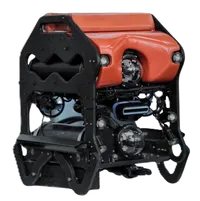
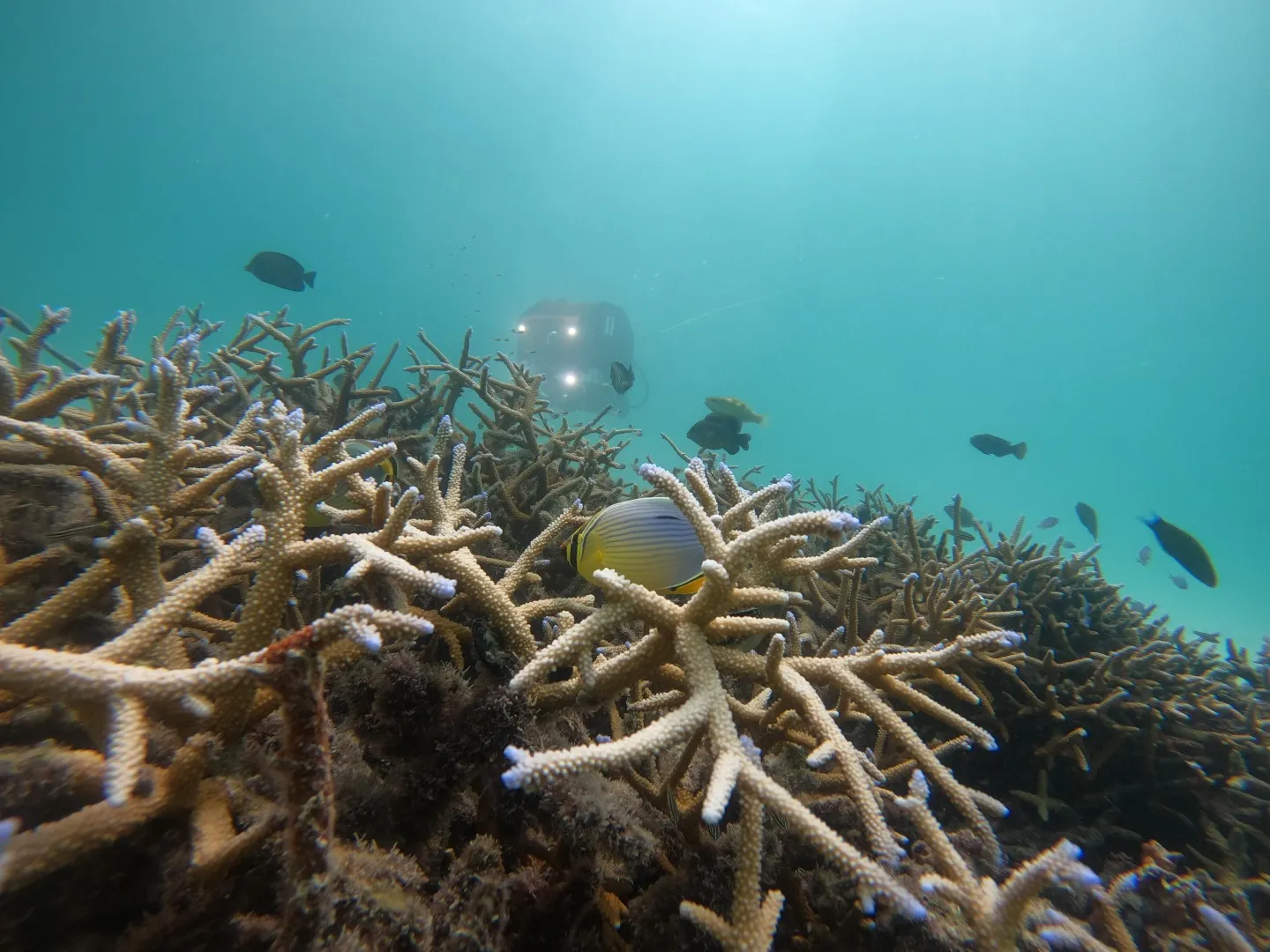
The EyeROV TUNA is deployed from the dam top, an inspection boat, or the upstream bank depending on site conditions. The inspection is carried out without reservoir drawdown, which is the draining of the reservoir to expose the dam face for dry inspection, and without diver intervention. The reservoir remains at its normal operating level throughout the survey.
Survey path
The ROV follows a pre-defined survey path to ensure systematic coverage of all submerged assets. The inspection includes vertical transects along the upstream dam face, inspection of intake and spillway structures, detailed examination of gate slots, and assessment of sediment accumulation near the dam wall and reservoir floor.
Data review and report
Data collected during the inspection, including HD video footage, sonar data, and depth measurements, is analysed and consolidated into a report. All observations and anomalies are documented with their corresponding chainage and depth, which enables accurate condition assessment. The final inspection report and associated visual data are hosted on the EVAP analytics platform, giving the client secure access to view the survey outcomes.
What underwater dam inspection detects
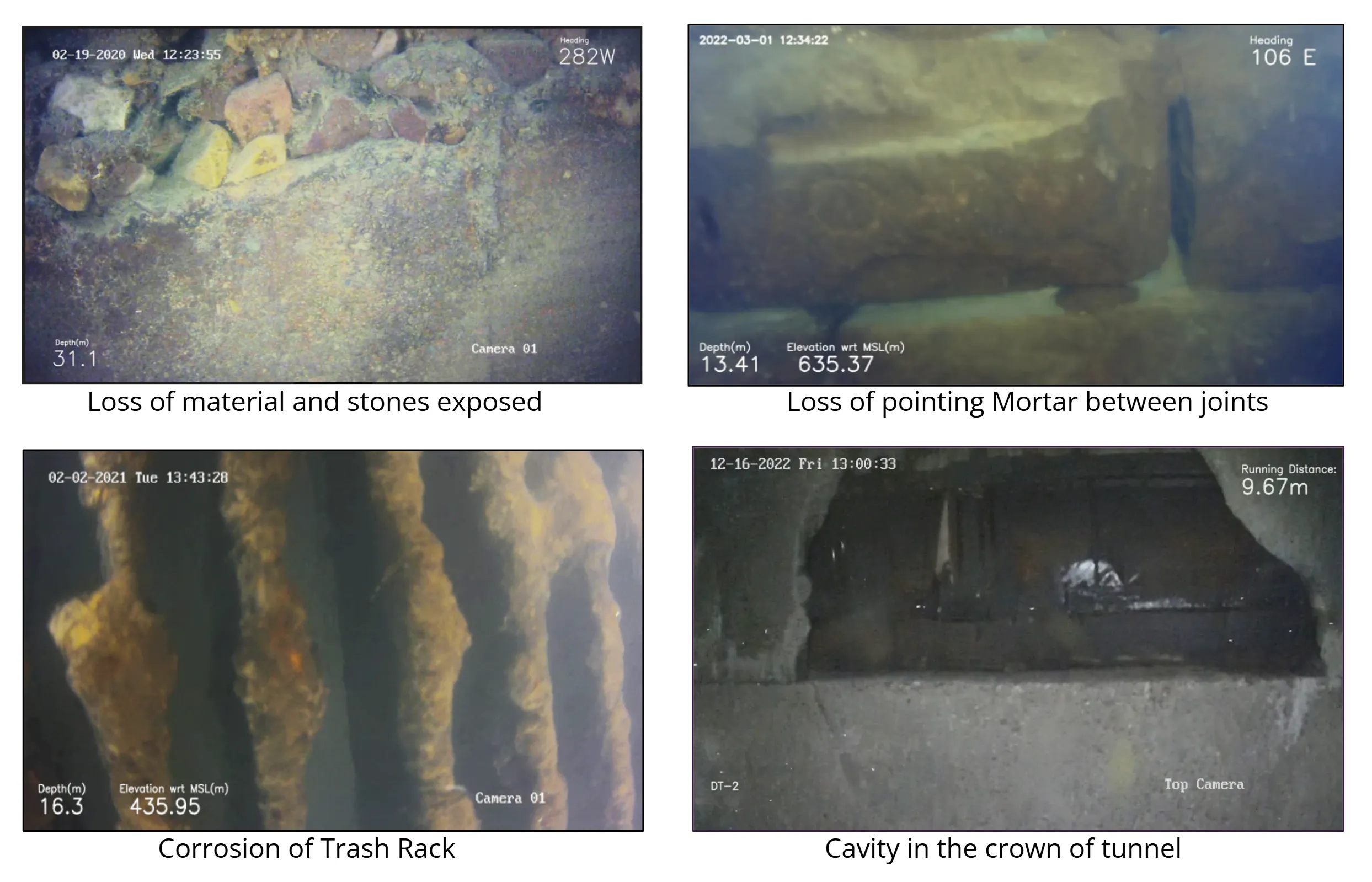
ROV inspection identifies a wide range of structural defects on concrete surfaces, including horizontal cracks, spalling, joint opening, and leaching. These defects are commonly observed in ageing gravity and arch dams, and they are measured using laser scalers.
The inspection evaluates the condition of gates: seal integrity, corrosion on gate frames, debris obstruction in intake bays, and stop log slot condition. Deteriorating gate seals cause leakage losses and, in spillway gates, can become a structural risk if undetected.
Sediment build-up is another finding. Silt in front of intakes reduces live storage capacity. Sonar cross-sections generated during the ROV survey allow volume calculations for de-silting planning, which is particularly relevant for dams on silt-heavy rivers.
Scour and undermining develop over years of discharge cycles. Erosion at the dam toe, exposure of foundation rock, and undermining of stilling basin slabs all progress slowly. ROV inspection of the plunge pool and spillway bucket detects scour before it requires emergency intervention.
Intake screens accumulate debris and marine growth, which reduces inflow and increases pressure differential. Where access permits, the ROV can inspect penstocks and outlet works for corrosion and lining condition without dewatering.
ROV inspection vs drawdown vs divers
Drawdown inspection gives full access to the dam face, but it is often associated with significant operational challenges, including extended downtime, revenue loss for a hydropower plant, water loss for irrigation, and environmental clearance requirements. It is appropriate for major rehabilitation, not for the routine monitoring the Dam Safety Act requires.
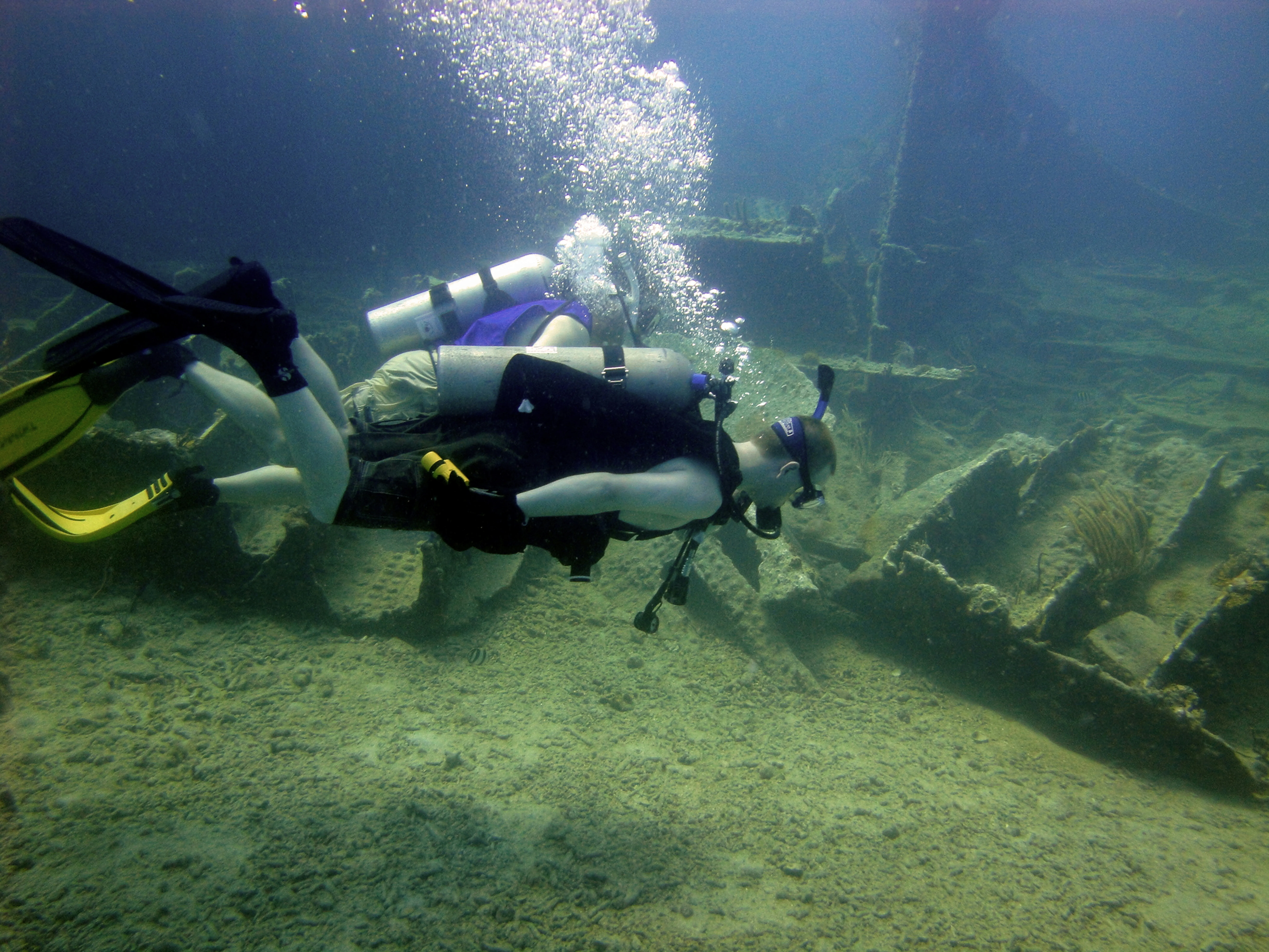
Diver-based inspection is limited by poor visibility, which in most Indian reservoirs is under a metre. Safe diving depth is also constrained, and entrapment risk near gate structures makes many dam environments unsafe for divers regardless of depth.
ROV-based inspection is a safe and non-intrusive alternative for underwater dam assessment. The survey is conducted while the reservoir remains at its normal operating level, which removes the need for drawdown and keeps operational disruption to a minimum. It is also repeatable year over year, with EVAP allowing direct comparison of the same dam across inspection cycles.
Indian dam safety regulations and ROV inspection
The Dam Safety Act 2021 requires specified dam owners to carry out regular inspections, maintain records, and submit findings to the State Dam Safety Organisation. CWC guidelines specify that inspection must cover the submerged portions, including the upstream face, gates, and outlet works. ROV surveys deliver timestamped video, position-logged findings, and a written report mapped to dam drawings. State Dam Safety Organisations across India increasingly accept ROV inspection as the primary method for the underwater portions of the mandated cycle.
EyeROV dam inspection in practice
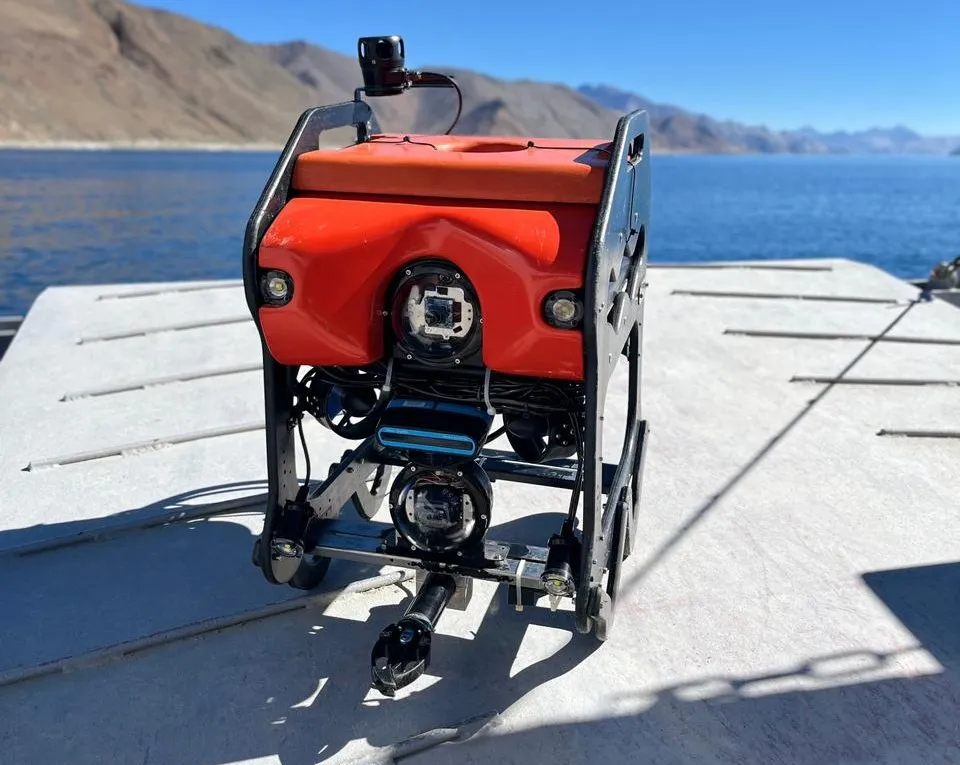
The EyeROV TUNA is the ROV deployed for underwater dam inspection projects in India. Designed for operation in confined and difficult underwater environments, the system is compact, manoeuvrable in tight spaces, and carries modular payloads configured to site conditions. The ROV can be configured with an HD camera, forward looking multibeam sonar, 3D mapping sonar, laser scaler, and depth and navigation sensors. In turbid reservoirs, sonar replaces the camera as the primary detection tool. All inspection data is processed and uploaded into the EVAP analytics platform, where year-on-year comparison of the same dam is built into the reporting workflow.
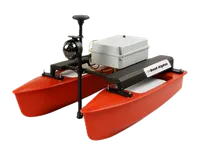
For siltation mapping across the wider reservoir, the autonomous surface vehicle can complement the ROV survey with bathymetric coverage. We also carry out submerged tunnel inspection, nuclear cooling pond inspection, and AI-powered dam inspections. For an overview of our methods, visit our dam inspection services.
To discuss an inspection requirement, contact EyeROV.
FAQ: underwater dam inspection
What is underwater dam inspection?
Underwater dam inspection is the assessment of a dam’s submerged structures, including the face, gates, intakes, outlet works, and reservoir floor, using a remotely operated vehicle controlled from the surface. It captures HD video, sonar imagery, and position-logged anomaly data while the reservoir stays at full pool, with no drawdown required.
Can an ROV inspect in turbid reservoir water?
Yes. In clear water the HD camera does most of the work. In turbid reservoirs, forward looking multibeam sonar produces high-resolution acoustic imagery that detects cracks, scour, and structural anomalies even when optical visibility is near zero. We configure the sensor payload based on expected site conditions.
Is ROV inspection accepted under the Dam Safety Act 2021?
Yes. The Act and CWC guidelines require regular inspection of the submerged portions of specified dams with documented findings. ROV inspection delivers timestamped video, position-logged anomalies, and a written report that meets these requirements. State Dam Safety Organisations increasingly specify ROV inspection for routine cycles.