




ROV Tether Management: A Guide to Safer Underwater Missions
Learn how ROV tether management systems keep power, data, and control stable underwater and reduce entanglement risk during inspection and rescue missions.
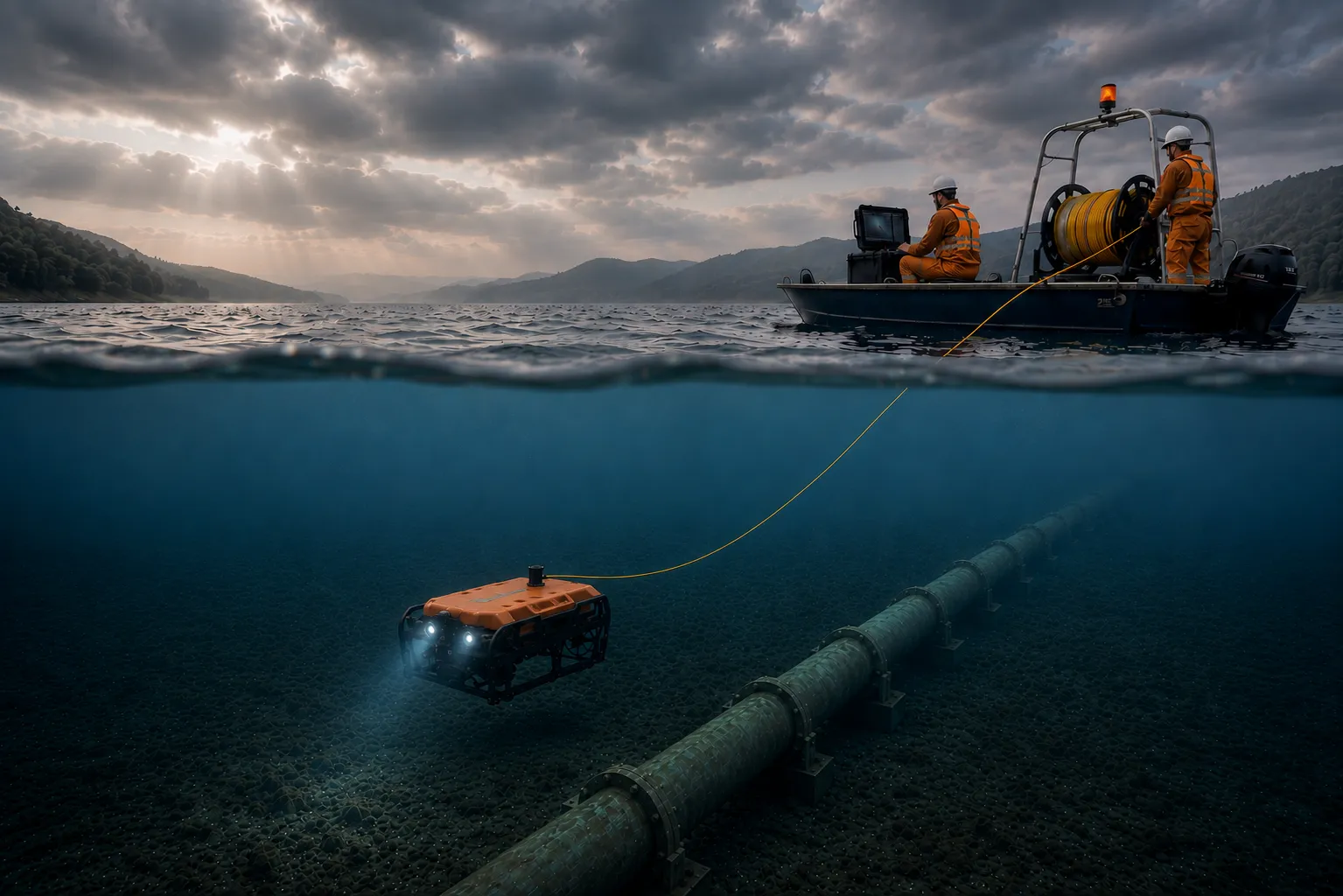
A tethered ROV is only as reliable as the cable connecting it to the surface. That cable, called a tether, may carry power, data, or both. If it is not managed well, the ROV can lose manoeuvrability, lose connection, or get stuck underwater. This is why tether management is a core part of any underwater mission, not a minor detail.
What is ROV tether management?
ROV tether management is the process of controlling the cable that links a remotely operated vehicle to its surface control station. This cable carries electrical power, video, sensor data, and control signals in both directions, and it is the ROV’s only connection to the operator.
As the ROV moves through the water, the tether follows behind it, like a leash. Too much cable floats loose, catches on objects, or gets pushed by the current. Too little pulls tight and restricts movement. Good tether management means releasing or reeling in the right amount of cable at the right moment, so the ROV stays connected, controllable, and easy to recover.
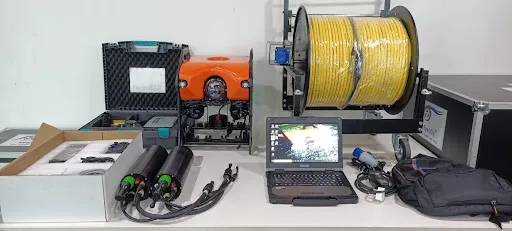
How an ROV tether management system (TMS) works
A tether management system, or TMS, is the equipment that pays out, reels in, and stores the tether during a dive, adjusting cable length as the ROV moves further from or closer to its anchor point.
Key components of a tether management system
A TMS usually has a reel or drum to store the tether, tensioners to control how the cable feeds out, and guides to keep it aligned. Many systems also include a locking mechanism that prevents the cable from being pulled out too fast or too far.
Tether deployment and retrieval process
As the ROV descends, the TMS releases tether as needed. When it is time to bring the vehicle back, the TMS reels the cable in at a controlled speed, keeping the return path predictable and lowering the chance of the cable looping or tangling.
Communication and power transmission
Inside the tether are wires and, in many cases, fibre optic cables. These carry power to the ROV and send video and sensor data back to the operator. Steady tension on the tether protects these internal connections from damage.
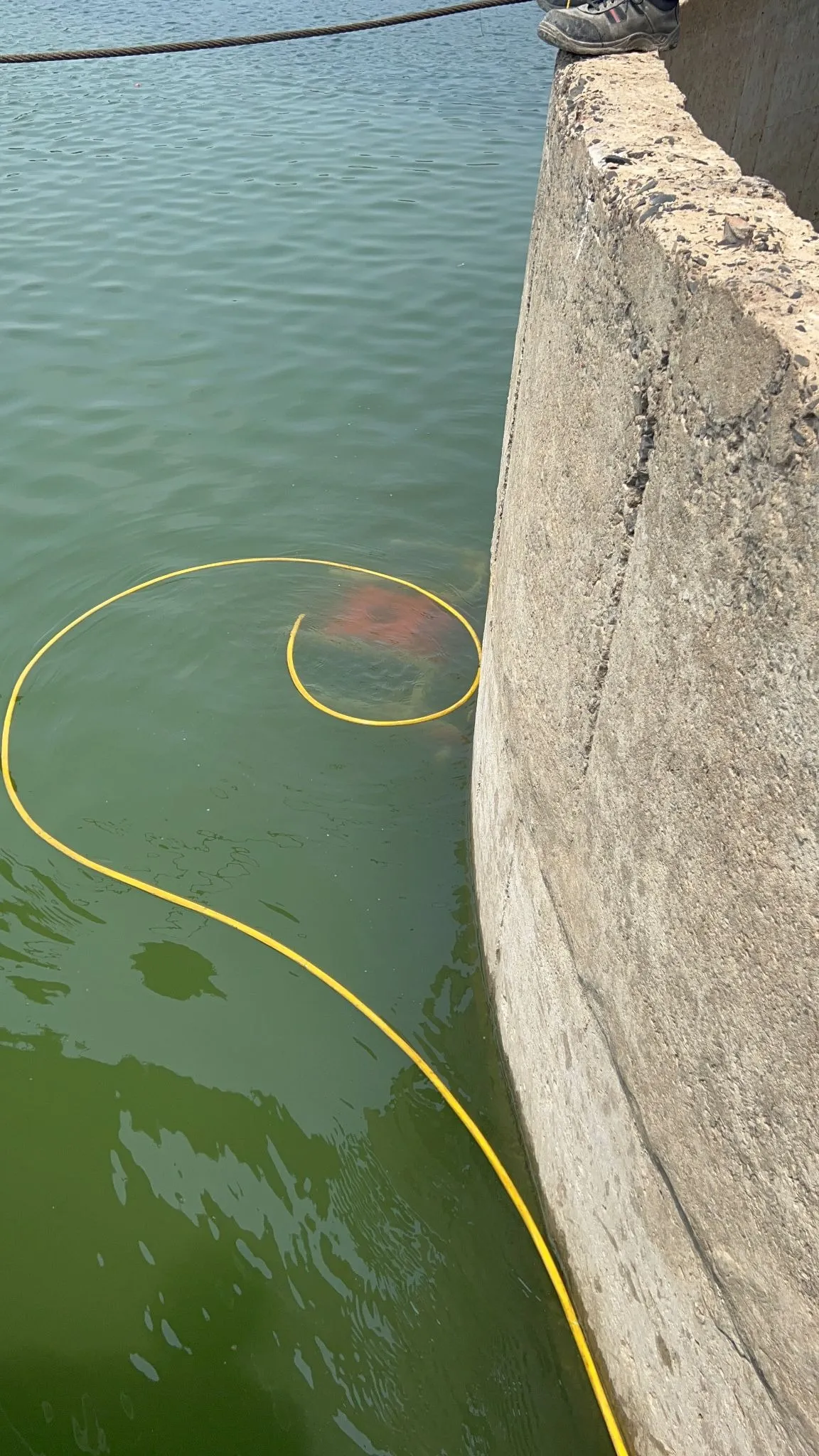
Why tether management is critical in underwater missions
Once the ROV is at working depth, the tether affects almost everything the pilot does. A well-managed tether lets the ROV respond quickly. A poorly managed one puts the whole mission at risk.
Improving vehicle manoeuvrability
Extra or badly tensioned tether can pull against the ROV’s thrusters, making it harder to hold a position or turn precisely near structures or the seabed. Keeping only the necessary length of cable in the water keeps this pull to a minimum.
Reducing tether drag and entanglement
As water flows across the tether, it creates drag, and this drag grows with cable length and current speed. Left unchecked, it can destabilise the ROV or let the tether catch on nearby objects.
Protecting data and power connectivity
A tether pulled too tight or strained can suffer internal damage, weakening the video feed and sensor data, or cutting off power entirely. Managing tension correctly keeps this connection intact for the full dive.
Common challenges in ROV tether management
Even with good equipment, real underwater conditions create challenges that operators need to plan for and monitor during every mission.
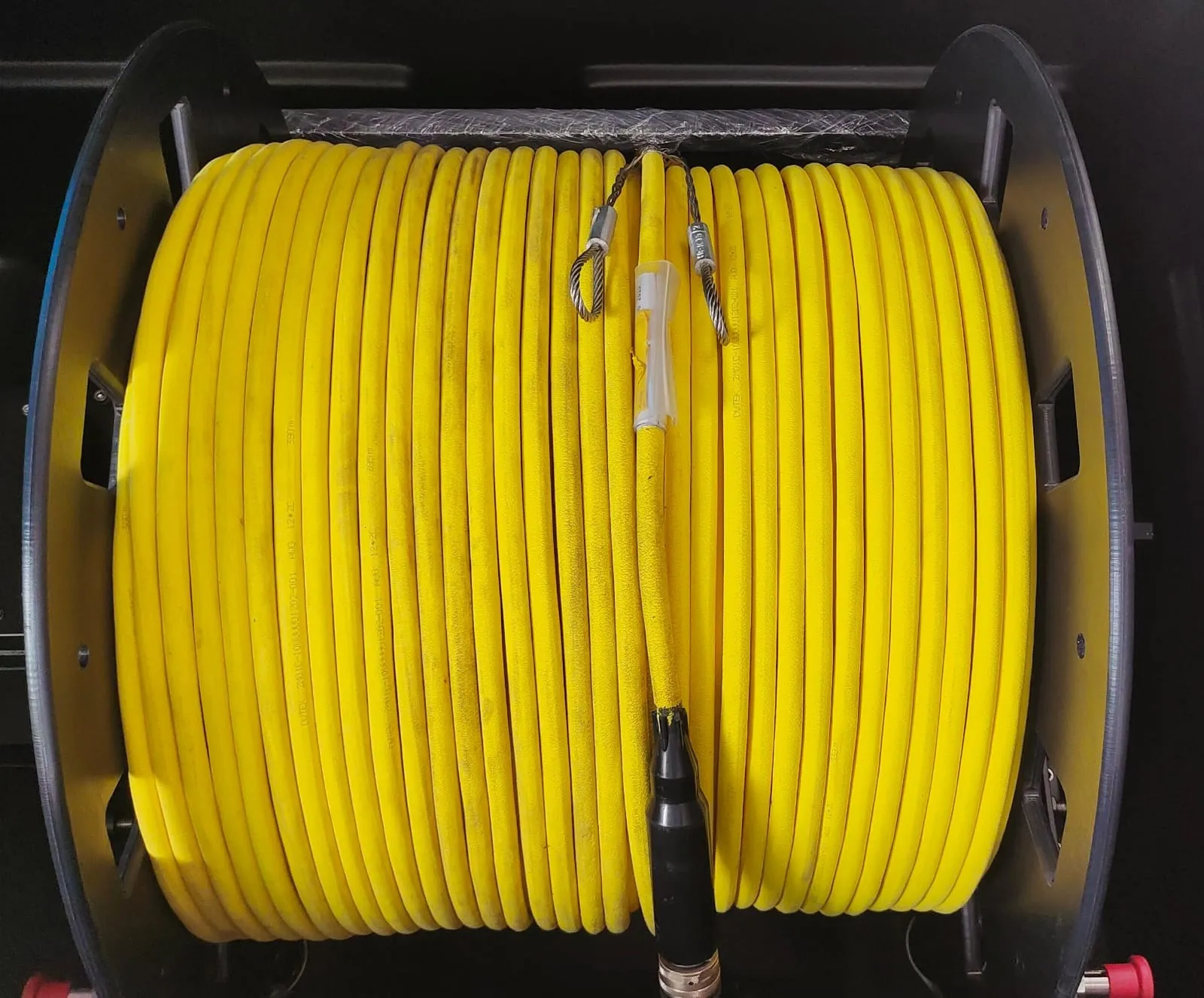
Strong currents and environmental conditions
Strong currents add drag and can push the tether off its expected path, making both control and recovery harder. Rough surface conditions add further strain, which is why sea conditions are checked before every dive.
Complex underwater structures
Pipelines, wreckage, and other cluttered spaces raise the chance of the tether catching on something. Operators plan entry and exit paths carefully, since a snagged tether can trap the ROV or take a slow process to free.
Tether wear and operational risks
Rubbing against the seabed, repeated bending, and marine growth all wear a tether down over time. Unnoticed wear can cause failure mid-mission, so regular inspection of the outer covering and connectors is standard practice.
Best practices for effective tether management
Good tether performance depends less on any single piece of equipment and more on following clear procedures before, during, and after each dive.
Mission planning before deployment
Before the ROV enters the water, the team checks current strength, the layout of underwater structures, and travel distance to estimate the tether length needed and flag areas that call for extra caution.
Continuous tether monitoring
Tension, cable length, and cable angle should be checked throughout the dive, not just at the start, so the pilot can notice a developing snag or current shift and respond before it affects the mission.
Proper recovery and maintenance procedures
After each dive, the tether should be checked for cuts, kinks, or exposed wires before it is stored. Catching small problems early keeps them cheap to fix and helps the tether last longer.
Applications of tether management in search and rescue
Search and rescue missions demand the most from tether management. They are time-sensitive and run in low visibility or near submerged hazards, conditions EyeROV’s search and rescue operations are built to handle.
Underwater search operations
During a search, good tether management keeps the ROV’s camera and sonar feed steady across the search area, giving responders continuous data instead of a signal that cuts in and out due to cable strain.
Evidence and recovery missions
Recovering evidence, wreckage, or a person requires careful, close movement near the target. Proper tether tension helps the ROV hold a steady position during this delicate work.
Operations around submerged structures
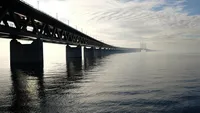
Bridges, capsized boats, and flooded buildings are common search and rescue environments, each carrying a risk of entanglement. Careful tether management lets the ROV move through tight, cluttered spaces without losing its connection to the surface.
Future trends in ROV tether management
Tether technology continues to develop alongside the missions ROVs are used for.
Smarter tether monitoring systems
Newer systems build sensors directly into the tether or TMS to track tension, length, and wear in real time, giving operators earlier warning than manual checks alone.
Lightweight and high-strength tether materials
Improvements in materials, such as stronger fibres and better outer coatings, are making tethers lighter and more resistant to wear, extending both the ROV’s range and the tether’s working life.
Integrated navigation and positioning technologies
Combining tether length data with the ROV’s positioning system gives pilots a clearer picture of the vehicle’s location relative to the surface, supporting better control in low-visibility conditions.
Ensure every mission stays connected below the surface
From routine ROV inspections to time-critical rescues, the tether is what keeps an ROV mission viable. Getting tether management right is what separates a capable vehicle from a dependable one.
Reliable tether management for safer search and rescue missions
In an emergency, safe ROV deployment depends on steady communication and control from the moment the vehicle enters the water. Reliable tether management cuts the mid-mission delays that tether issues cause and improves manoeuvrability in confined or debris-filled environments. For law enforcement, coast guard, and disaster response teams, this means a search continues without repeated stops to retrieve and redeploy the vehicle. Our systems deploy with TMS hardware, and tether discipline is a standard operating requirement across EyeROV’s search and rescue deployments.
Built for reliable performance in every underwater mission
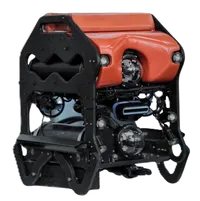
The EyeROV SAGARA is built for demanding underwater environments. It holds position near structures, keeps a steady video and data link through its managed tether, and responds precisely when the pilot needs close control. From search and rescue operations to underwater inspections, it supports teams operating in complex conditions.
To plan a mission or discuss a requirement, contact EyeROV.
Frequently asked questions
What is ROV tether management?
It is the process of controlling the cable connecting an ROV to its surface station, so power, data, and control stay stable during a dive.
What is a tether management system (TMS)?
A TMS is the equipment that pays out, reels in, and stores the tether during operations, keeping cable length and tension under control.
Why is tether management important for ROV operations?
It keeps the ROV manoeuvrable, protects the power and data connection, and lowers the risk of entanglement or mission failure.
How does an ROV tether transmit power and data?
Wires carry power, while wires or fibre optic cables carry video, sensor data, and control signals between the ROV and the surface.
What causes tether entanglement during underwater missions?
Excess slack, strong currents, and cluttered underwater structures are the most common causes.
How can tether damage be prevented?
Regular inspection, controlled tension during launch and recovery, and proper storage between missions.
What are the benefits of using a tether management system?
Better manoeuvrability, less drag and entanglement risk, a protected connection, and a longer operational range.
How does tether management improve search and rescue operations?
It keeps communication and control steady in time-sensitive, low-visibility conditions, where reliable data matters most for search and rescue teams.
What industries rely on tethered ROVs?
Offshore oil and gas, marine inspection, defence and naval operations, port authorities, and search and rescue agencies.
What should be considered when selecting an ROV tether system?
Tether strength, depth rating, data transmission capability, and how well the paired TMS handles deployment and recovery. The EyeROV SAGARA pairs a managed tether with the payloads professional missions need.