






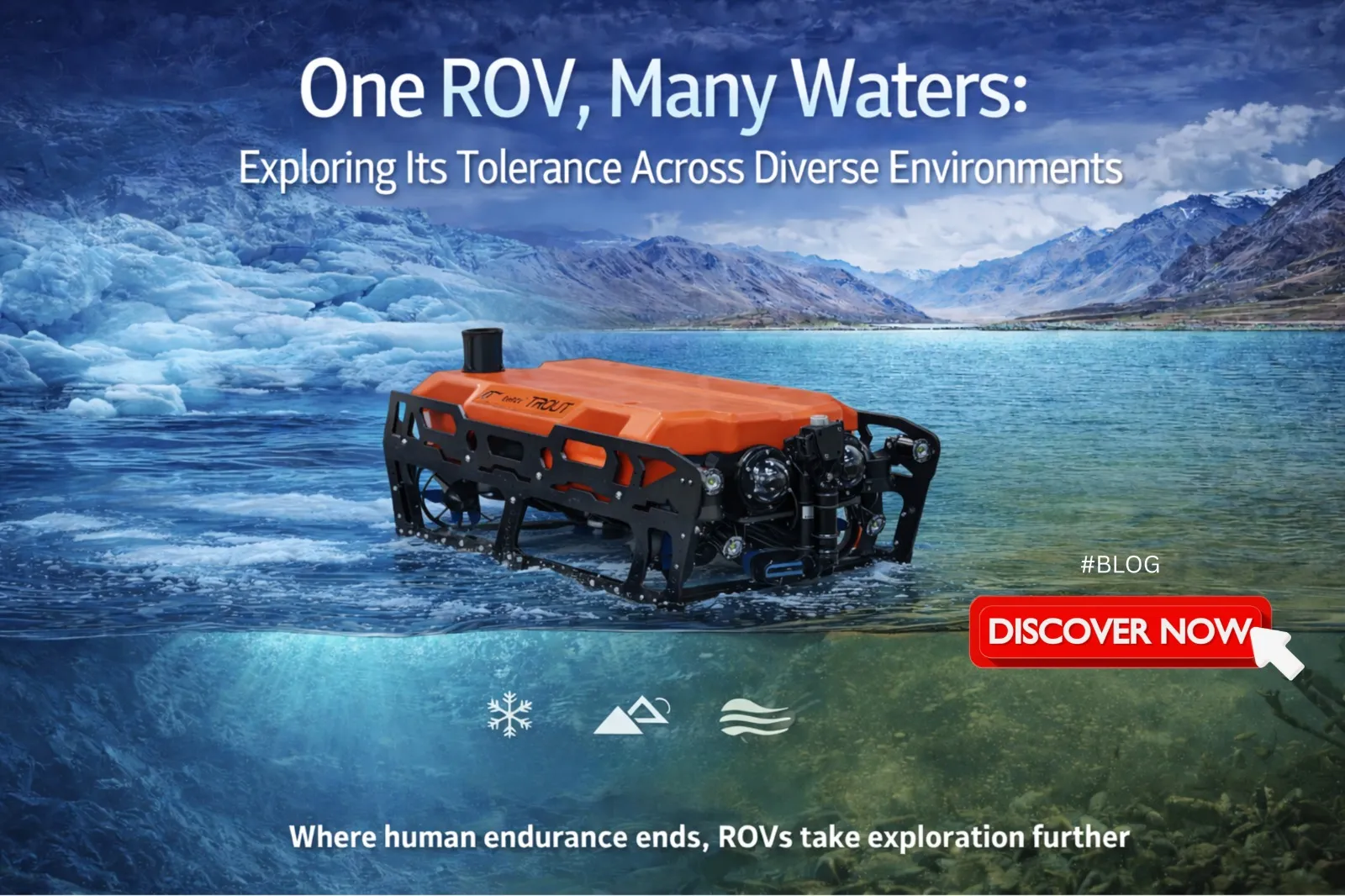
One ROV, Many Waters: Exploring Its Tolerance Across Diverse Environments
Explore how ROVs operate in extreme underwater environments—from Antarctic ice and high-altitude lakes to murky reservoirs—enabling safe exploration, inspection, and recovery beyond human limits.
How far can humans really go underwater?
Could we dive into the icy, near-frozen waters of Antarctica, navigate the murky depths of a tropical reservoir, or explore a high-altitude lake perched atop the mountains?
And when human endurance hits its limits, can exploration continue, or does curiosity stop there?
Underwater worlds are some of the most extreme and unpredictable places on Earth. Crushing pressure, freezing temperatures, poor visibility, and swift currents make direct human exploration risky, if not impossible. Yet, these waters hold secrets: clues to our planet’s history, delicate ecosystems, submerged infrastructure, and indicators of environmental change that may shape the future.
This is where Remotely Operated Vehicles (ROVs) step in, our mechanical eyes, ears, and hands beneath the waves. They let scientists, engineers, and rescue teams go places humans cannot, pushing the boundaries of discovery while keeping operators safe.
What Is an ROV and How Do They Survive Extreme Conditions?
An ROV is an unmanned, tethered underwater robot controlled from the surface. Through live video feeds and sensor data, operators can navigate, inspect, and interact with environments hundreds of meters below the surface, all without putting human lives at risk.
But surviving the depths isn’t just about being underwater. ROVs are engineered to withstand intense pressure, extreme temperatures, strong currents, and poor visibility. Their “limits” aren’t biological; they’re technical: thermal tolerance, structural integrity, sensor performance, and power capacity define how far they can go.
In short, ROVs allow exploration where humans physically cannot tread, extending the reach of curiosity beyond natural boundaries.
The Extreme Challenges Beneath the Surface
Every underwater environment tells a different story:
-
Polar seas are frozen landscapes beneath the waves. Ice, near-zero temperatures, and hidden currents turn exploration into a high-stakes puzzle. In Antarctica, water averages –34.4°C, with air temperatures plunging even further.
-
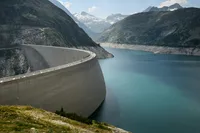
High-altitude lakes like Pangong Tso test endurance in another way: low atmospheric pressure, thin oxygen, and cold water challenge even seasoned explorers.
-
Warm tropical reservoirs and hot springs may seem easier, but thick sediments, murky water, fluctuating temperatures, and biological growth make navigation tricky.
For humans, these factors create danger. For ROVs, they are just parameters to be engineered around.
The Tools That Make ROVs Resilient
ROVs are not just cameras on a wire, they are fully equipped explorers:
-
High-Definition Cameras: Cameras capture every angle of submerged terrain, structures, and habitats.
-
Forward Looking Multibeam Sonar: Sees through turbid or dark water, revealing objects invisible to the camera eye.
-
Forward-Looking Sonar (FLS): Scans obstacles ahead, ensuring safe navigation in low visibility or tight spaces.
-
USBL Positioning: Tracks the ROV’s exact location using acoustic signals, crucial for surveys, mapping, and recovery.
-
Doppler Velocity Log (DVL): Measures accurate underwater speed and distance measurement of the ROV.
-
Robotic Manipulator Arm: Functions like a human hand to collect samples, remove obstacles, or interact with underwater objects.
Together, these systems turn the ROV into a fearless explorer, capable of operating reliably where humans can’t.
Case Study 1: The Frozen Depths of Antarctica
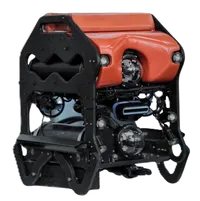
Imagine navigating beneath the icy expanse of Antarctica. Freezing water, ice cover, low visibility, and turbulent currents surround you. Human divers cannot remain here for long, but the EyeROV SAGARA thrives.
Equipped with cameras and advanced sensors, including CTD, Forward-Looking Sonar, USBL, DVL, and a manipulator arm, the ROV conducted routine surveillance and environmental observation at 300 meters depth, using a 300-meter tether.
It mapped the seabed, collected water and sediment samples, and monitored marine habitats, all safely, efficiently, and beyond human limits. In Antarctica, exploration is no longer constrained by biology, only by engineering.
Case Study 2: Underwater Recovery in Extreme High-Altitude Conditions
Now picture a lake perched among mountains. The air is thin, cold, and oxygen levels are low. A submerged vehicle lies at the bottom. Human recovery is almost impossible, yet the EyeROV TUNA ROV handles the mission with precision.
Its high-definition cameras, forward looking multibeam sonar, USBL positioning, and robotic arm allow it to locate and recover objects in challenging conditions. Even at high altitude and reduced pressure, the ROV completes its task, performing what humans simply cannot.
Case Study 3: Inspecting Warm and Turbid Waters
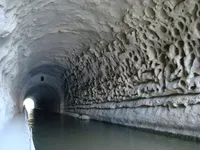
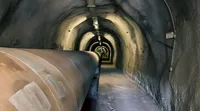
ROVs are equally capable in warmer, sediment-heavy waters. Tropical reservoirs, dams, penstocks, and canals demand:
-
Routine inspection of submerged infrastructure
-
Bathymetric mapping
-
Structural monitoring
-
Reservoir and sewage surveillance
Even in murky water, forward looking multibeam sonar reveals hidden objects, while manipulator arms interact with structures. From cold polar seas to warm tropical waters, ROVs adapt seamlessly.
Engineering Tolerance vs. Human Limits
Unlike humans, ROVs are immune to:
-
Cold shock or hypothermia
-
Oxygen deprivation
-
Fatigue or decompression sickness
Their performance is bounded by engineering: depth rating, thermal range, structural strength, sensor accuracy, and tether capacity. With these parameters, ROVs explore environments humans cannot survive in, safely, reliably, and repeatedly.
Unlocking the Secrets Beneath
From Antarctica to high-altitude lakes and tropical reservoirs, ROVs uncover what humans cannot:
-
Salinity and water chemistry at varying depths
-
Submerged geological formations
-
Climate history preserved in sediments
-
Hidden infrastructure risks
-
Lost objects or vehicles
ROVs are the key to understanding and protecting our underwater world.
Conclusion: One ROV, Many Waters
ROVs are redefining the boundaries of exploration:
-
In –34.4°C polar seas, they map and monitor areas humans cannot survive.
-
In high-altitude lakes, they navigate and recover objects beyond human tolerance.
-
In warm, murky reservoirs, they inspect and survey continuously without fatigue.
One platform. Multiple environments. Limitless possibilities.
Where human endurance ends, ROVs take exploration further, revealing the mysteries of our waters, one mission at a time. Yet this is only the beginning. Every new mission uncovers fresh challenges and untapped possibilities beneath the surface, and we are ready, and excited, to embrace them, find innovative solutions, and continue moving forward into the unknown.