






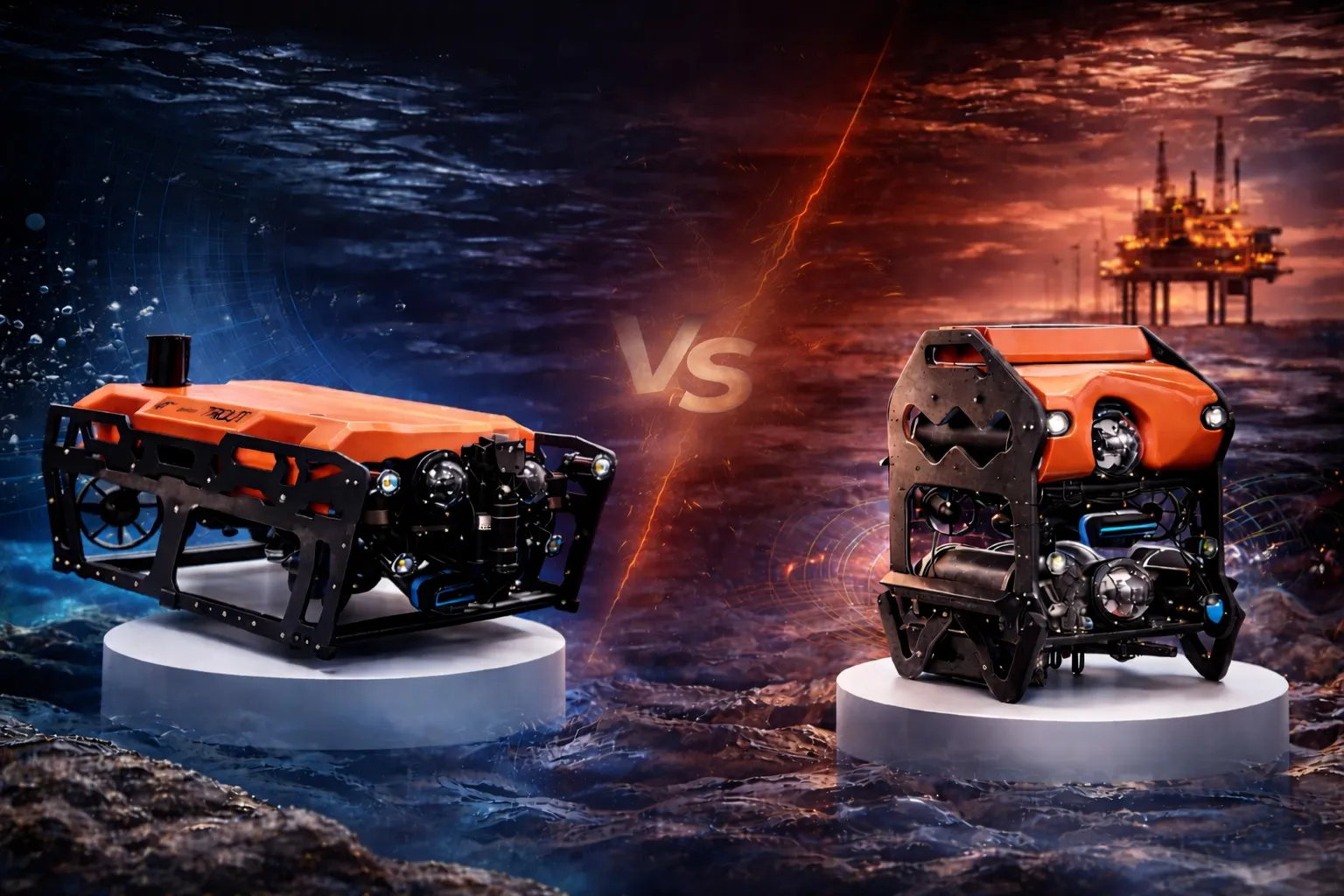
TUNA vs SAGARA ROV: A Complete Comparison for Underwater Inspections
Comparing EyeROV TUNA vs SAGARA ROV? Explore key differences in design, depth, and capabilities to find the right underwater inspection ROV for your mission.
TUNA vs SAGARA ROV: A Complete Comparison for Underwater Inspections
A dam tunnel inspection demands something different from an offshore platform inspection. A pipeline interior is nothing like an open seabed survey. Getting this match right is what EyeROV’s experienced team does before every deployment, analysing the site, the mission scope, and the conditions, then selecting the ROV that delivers the best outcome.
EyeROV operates two purpose-built underwater inspection ROVs: TUNA and SAGARA. Both are field-proven. Both support a range of inspection payloads. But they are engineered for fundamentally different environments, and understanding that difference helps inspection teams, engineers, and asset owners know exactly what to expect from each platform.
Understanding Underwater Inspection ROVs
Remotely operated vehicles carry cameras, sonar, and precision sensors directly to underwater inspection sites, delivering structured data without risk to human life. From dam inspections and tunnel profiling to offshore oil and gas surveys, ROV inspection systems are now the standard for marine engineers and subsea inspection providers worldwide. EyeROV’s TUNA and SAGARA are two distinct platforms within this space, built for fundamentally different environments.
Overview of TUNA ROV
Key Features of TUNA
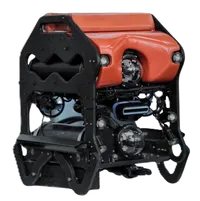
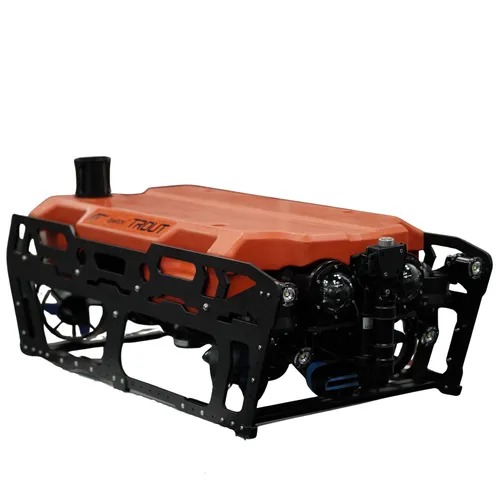
TUNA is EyeROV’s compact, high-performance observation-class ROV. Its small profile navigates confined geometries like tunnels, pipelines, and intake structures where larger vehicles simply cannot operate. It carries a 4K camera with 10x zoom, 3000-lumen LED lighting, and operates to a 300m depth rating on a neutrally buoyant tether. TUNA supports a payload capacity of 2 to 4 kg, allowing it to mount the right instruments for each specific job. It runs on the i-Control Hub software, operable from a standard laptop with a joystick, making it lean and rapidly deployable. TUNA features a hybrid power system that operates on external power and battery. It is equipped with a 500 Wh Li-ion battery and supports a 1.6 kW, 230V AC external power supply. It offers up to 2 hours of endurance on battery and unlimited operation on tether.
Typical Applications of TUNA
TUNA has been the consistent choice for access-critical infrastructure across real-world deployments:
-
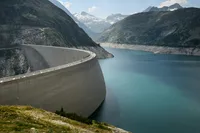
Dam inspections, including spillways, intake structures, plunge pools, and gate assessments across multiple hydropower facilities
-
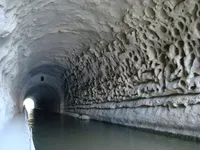
Tunnel inspections, covering head race tunnels, diversion tunnels, and anomaly detection
-
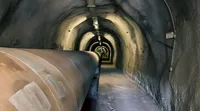
Pipeline inspections, with internal surveys extending up to 400 metres
-
Ship hull and vessel inspections for close-range defect identification
-
Bridge and underwater structural integrity surveys
-
Search and recovery operations in restricted waterways
Overview of SAGARA ROV
Key Features of SAGARA
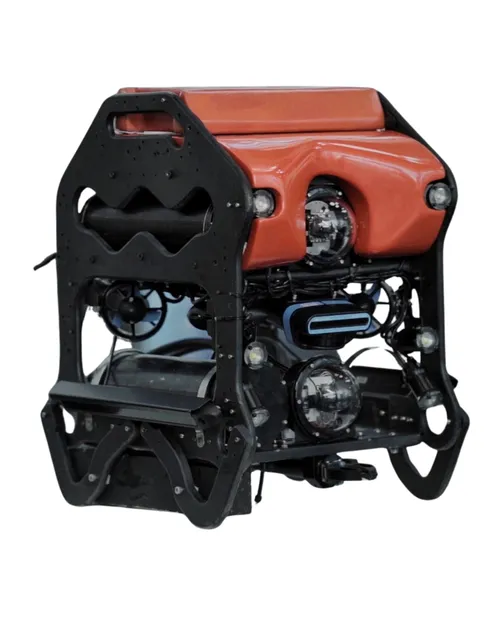
SAGARA is EyeROV’s military-grade, deep-sea inspection platform built for autonomous navigation, advanced imaging, and rugged construction. It reaches 300 m depth, carries dual cameras with a 4K primary (10x optical zoom) and a Full HD wide-angle (120° field of view), and delivers 6000-lumen+ illumination. With 6 degrees-of-freedom maneuverability and a top speed of 3+ knots, SAGARA holds position where standard ROVs lose stability. A payload capacity of 5 to 7 kg supports heavier, more complex sensor configurations for demanding open-water missions.
Typical Applications of SAGARA
SAGARA is deployed where conditions are open seas, deep waters, or operationally complex:
-
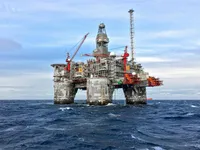
Offshore oil and gas infrastructure, including corrosion detection and subsea pipeline inspection
-
Shipwrecks and seabed surveys for deep-water inspection and wide-area documentation
-
Coral reefs and biodiversity surveys for marine ecosystem monitoring
-
Defence and maritime surveillance missions with multi-sensor data collection
-
Search and rescue operations in open-sea conditions
Explore the full specifications of EyeROV TUNA and EyeROV SAGARAon our product pages.
TUNA vs SAGARA: Key Differences
| Feature | TUNA ROV | SAGARA ROV |
|---|---|---|
| Dimensions | 500 x 400 x 500 mm | 890 x 510 x 390 mm |
| Weight (Air) | 25 kg | <40 kg |
| Depth Rating | 300 m | 300 m |
| Speed | Up to 2 knots | Above 3 knots |
| Maneuverability | 4 DoF | 6 DoF |
| Tether Length | Up to 300 m | 400 m |
| Primary Camera | 4K H265, 90° FOV, 45° tilt | 4K H265, 10x optical zoom, 60° FOV |
| Secondary Camera | Full HD 1080p H264 | Full HD H264, 120° wide angle, 60° tilt |
| Payload Capacity | 2 to 4 kg | 5 to 7 kg |
| Optimal Environment | Confined: tunnels, pipelines, dams, tanks | Open-water: offshore, coastal, defence, marine |
| Mission Type | Precision-focused, single objective | Multi-sensor, multi-phase, extended operations |
| Autonomous Navigation | Station keeping, waypoint | Full autonomous: waypoint, geofencing, return to home, survey paths |
Design and Size
TUNA’s compact form factor is purpose-built for confined access points like pipeline entries, tunnel portals, and dam sluice openings. SAGARA’s larger, robust build supports greater depth capacity, dual-camera systems, and higher payload weight, suited to open-water operations where size is not a constraint.
Inspection Capability
TUNA delivers high-precision visual and sensor data in controlled environments, excelling at targeted inspections like measuring wall thickness across a dam face or identifying defects inside a pipeline. SAGARA handles broader, multi-layered inspection tasks where its heavier payload capacity supports forward looking multibeam sonar, robotic arms, and DVL navigation simultaneously.
Operational Environment
TUNA is optimised for controlled, low-current conditions. Tunnels, inland waterways, and enclosed dam structures. SAGARA is engineered for open seas, tidal currents, offshore platforms, and deep exposed sites where stability and thrust matter most.
Mission Complexity
TUNA handles focused, access-constrained inspections with clear objectives. SAGARA supports multi-phase operations, from wide-area survey through to detailed sub-surface inspection, within a single deployment.
When Should You Choose TUNA?
EyeROV’s team deploys TUNA when the inspection involves confined or access-restricted sites like tunnels, pipelines, tanks, and dam intake structures. It is the right choice for high-precision tasks such as UT thickness readings, defect identification, and structural profiling in controlled water conditions.
When Should You Choose SAGARA?
EyeROV’s team selects SAGARA when the mission demands open-water or offshore environments, depth beyond shallow limits, conditions with tidal currents or wave action, or heavier sensor configurations. For wide-area surveys like seabed mapping, shipwreck documentation, or defence operations, SAGARA’s stability and higher payload capacity deliver reliable results where other industrial underwater robots lose performance.
How Underwater ROVs Improve Inspection Safety and Efficiency
Every deployment produces structured, data-driven inspection records. Video footage, sonar data, and UT readings are compiled into formal reports through EVAP, EyeROV’s AI-powered visualization and analytics platform, supporting maintenance decisions and long-term asset management.
Robotic underwater inspection eliminates human exposure to confined spaces, zero-visibility zones, and structural hazards. UT measurements across thousands of data points deliver far more reliable information than visual survey methods. Inspections that previously required days are completed in hours with full sensor data output, and every inspection produces a documented, replayable record for compliance and regulatory needs.
Choosing the Right Underwater Inspection Robot
No two missions are identical. Before every deployment, EyeROV’s experienced team evaluates the site environment, depth, water conditions, and inspection scope, then selects and configures the ROV that delivers the best result. The team handles the assessment and deployment so every marine inspection ROV mission is matched to the right platform from the start.
Frequently Asked Questions
What is the difference between TUNA and SAGARA ROV?
TUNA is a compact observation-class ROV designed for confined environments like tunnels, pipelines, and dams. SAGARA is a military-grade ROV built for open-water and offshore missions requiring greater depth, stability, and payload capacity.
Which underwater ROV is better for inspections?
It depends on the environment and mission. EyeROV’s team assesses site conditions, depth, and inspection objectives for every project and deploys the ROV best suited to deliver accurate results.
What industries use underwater inspection robots?
Hydropower and dam management, offshore oil and gas, maritime and port authorities, pipeline operators, bridge and civil infrastructure, defence, and marine environmental monitoring.
What are the benefits of using ROVs instead of divers?
ROVs eliminate human risk in hazardous environments, deliver objective and repeatable sensor data, reduce operational time and logistics, and produce structured inspection records for asset management and regulatory compliance.
Which ROV is suitable for confined underwater environments?
TUNA ROV is specifically designed for confined sites including tunnels, pipelines, dam intake structures, and tanks where access is restricted and inspection precision is critical.
If you are evaluating underwater inspection ROV solutions for an upcoming project, start a conversation with EyeROV. Our team will assess your requirements and recommend the right platform for your mission.
To learn more about how remotely operated vehicles work, read our guide: What is ROV? Meaning, Types and How It Works Underwater.