





Underwater Drones: 7 Industries Redefining Subsea Operations
Discover how underwater drones and ROVs power offshore inspection, defense, dam monitoring, and marine research. Learn key capabilities and what to evaluate before deployment.
Underwater drones: 7 industries redefining subsea operations
Subsea inspection has always been constrained by access. Reaching a submerged dam face, a buried pipeline, or a flooded tunnel requires methods suited to the underwater environment, and those methods have evolved significantly. Underwater drones now operate across offshore energy, defense, civil infrastructure, and marine research as standard operational tools. This guide explains how they work, where they are used, and what to evaluate before selecting one.
What are underwater drones?
“Underwater drone” covers all unmanned underwater robots. Two classifications apply.
ROVs (remotely operated vehicles) are tethered and piloted by an operator in real time. The tether carries power down and returns live data from payloads like video, sonar, and sensor feeds to the operator’s console.
AUVs (autonomous underwater vehicles) are untethered and pre-programmed. Because radio waves do not travel through water, AUVs operate on onboard logic and download data after recovery.
Consumer vs industrial underwater systems
Consumer systems handle simple tasks like shallow visual checks and basic documentation. Industrial underwater drones operate under high hydrostatic pressure, in low-visibility conditions, and against subsea currents. They detect corrosion, structural cracks, and micro-leakages that optical cameras alone cannot resolve. Payloads like forward looking multibeam sonar and 3D mapping sonar extend capability where camera-based inspection reaches its limit. That distinction is the starting point for every procurement decision.
How underwater drones work
Cameras, sensors, and imaging systems
Industrial ROV cameras are built for subsea pressure and low light, with HD to 4K resolution, wide field of view, integrated LED lighting, and pressure-rated housings. Where cameras reach their limit, sonar takes over. Forward looking multibeam sonar handles acoustic target detection, 3D mapping sonar produces structural cross-sections, and multibeam sonar maps the seabed in 3D.
Propulsion and navigation
Most inspection ROVs use four to eight vectored thrusters for three-axis control (forward, lateral, vertical), which allows station-keeping in subsea currents. Positional stability directly affects image clarity, making thruster configuration a factor in inspection quality. Navigation integrates depth sensors, compass, DVL for seabed-relative velocity, and USBL acoustic positioning for georeferenced survey output.
Remote control and real-time monitoring
The ROV tether carries power down and returns live video, sonar, and sensor data to the deck console. The operator pilots using a joystick in real time. AUVs run pre-loaded missions and retrieve data after recovery. ROVs suit real-time inspection. AUVs suit wide-area autonomous surveys.
Types of underwater drones
Inspection ROVs
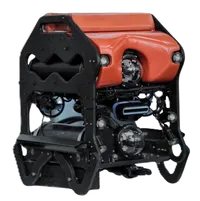
Compact, neutrally buoyant, built for confined spaces like flooded intake shafts, jacket voids, and narrow culverts. Standard payload is an HD camera with LEDs, expandable with sonar transducers or thickness measurement tools. EyeROV’s TUNA is a professional inspection ROV deployable by a two-person team without lifting equipment, designed for high-frequency, multi-site programmes where mobilisation speed matters as much as what the vehicle does in the water.
Observation and survey drones
Observation systems deliver situational awareness through high-resolution camera feeds. Survey-class ROVs go further with DVL, USBL, and multibeam sonar producing georeferenced 3D point cloud models, precise defect location, dimensional measurement, and structural profiles that engineering teams and regulators use for formal asset assessments.
Heavy-duty industrial underwater vehicles
Work-class ROVs carry manipulator arms, cutting tools, and multi-sensor payloads. They operate beyond 3,000 metres in deepwater oil and gas environments where physical subsea intervention is required.
Industrial applications of underwater drones
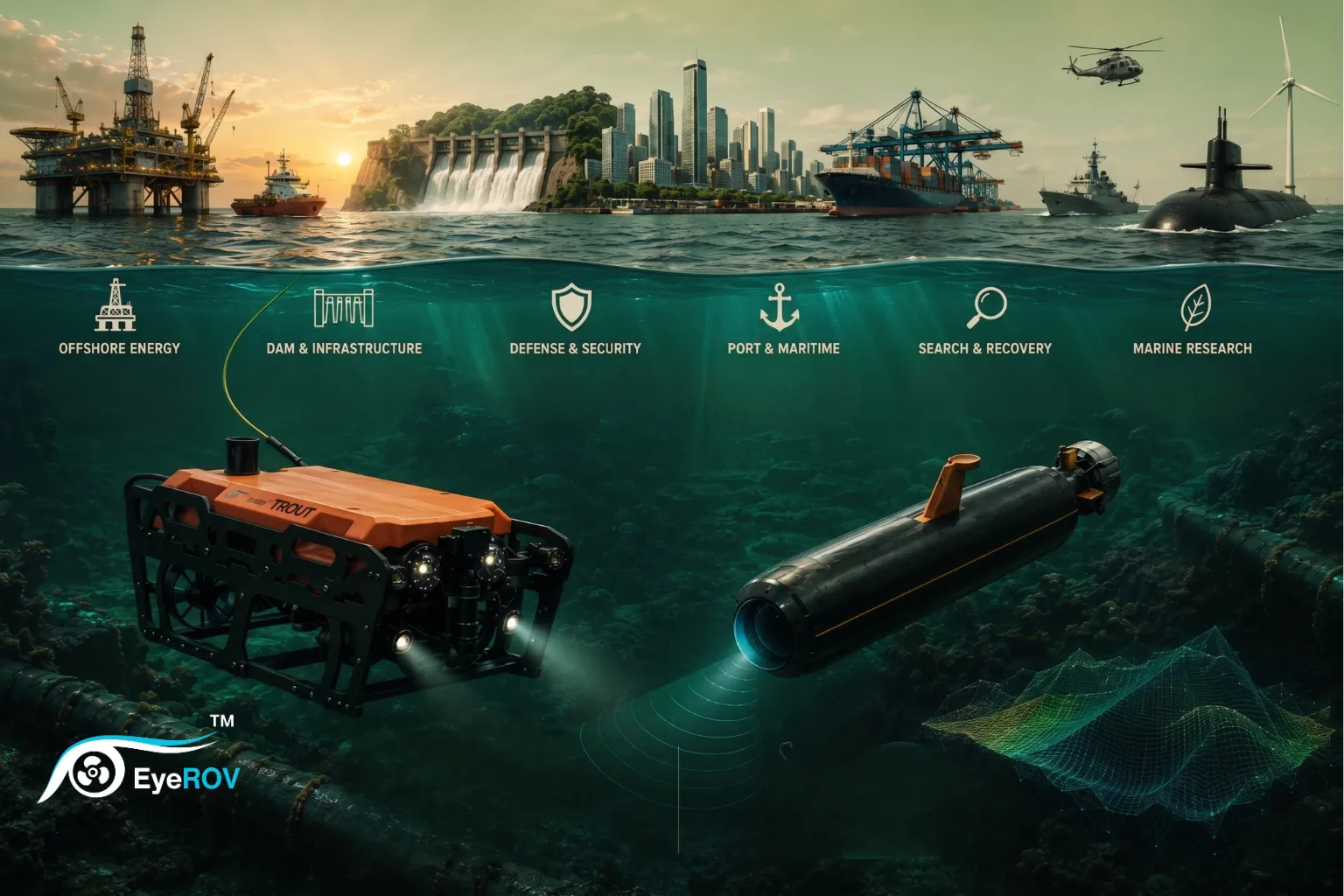
Offshore oil and gas inspection
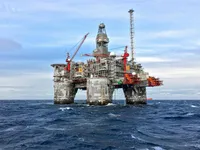
Buried pipeline sections need acoustic profiling for freespan and condition assessment. Rig jacket structures and risers require close-visual surveys at depth. Seawater intake wells need internal profiling for marine growth and bore restriction without dewatering. Forward looking multibeam sonar assesses sections where cameras cannot see.
Defense and security operations
Underwater drones extend operational reach into environments with restricted visibility and wide search areas. Deployments include mine countermeasures, port hull inspection for unauthorised attachments, restricted-zone surveillance, and threat assessment using manipulator-equipped ROVs. In search and rescue, ROVs survey target areas ahead of dive teams and guide personnel to precise locations via the tether.
Port, dam, and infrastructure inspection
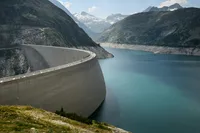
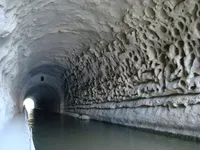
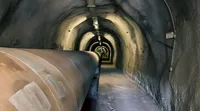
ROVs extend access into structures that are difficult to reach by other means. Dam face panels, sluice gates, and spillway channels are assessed for cracking and erosion without reservoir drawdown. Intake tunnel bores are surveyed internally for lining condition and blockages. Port piles, fender systems, and sill beams are checked for corrosion and impact damage without cofferdams or dewatering.
Search, recovery, and emergency response
ROVs survey search areas, establish underwater situational awareness, and relay precise coordinates to response teams. Manipulator-equipped ROVs can also physically retrieve objects.
Marine research and environmental monitoring
ROVs and AUVs provide access to demanding environments without direct human presence. Applications include coral reef health documentation, seabed bathymetric mapping, sub-ice oceanographic research, deep-sea biodiversity surveys, and marine growth monitoring on subsea infrastructure.
Advantages of using underwater drones
Improved safety in hazardous environments
ROVs provide prior reconnaissance of subsea conditions, including structural state, visibility, current, and hazard presence, before teams make deployment decisions.
Faster and more cost-effective inspections
A compact ROV team deployed from a jetty completes inspection tasks with a smaller mobilisation footprint. For multi-site programmes, cost-per-inspection drops and cycle time compresses.
Access to deepwater and hard-to-reach areas
Industrial ROVs operate at depths and in geometries beyond practical reach by other means. Buried pipelines, narrow intake pipes, turbine voids, and submerged culverts are all accessible.
High-quality underwater data collection
HD video with GPS timestamps, crack-width imagery, thickness measurements, and 3D sonar models are replicable, shareable, and auditable across inspection cycles. This supports engineering decisions, regulatory submissions, and long-term asset condition trending. Inspection data is processed through platforms like EVAP (EyeROV Visualization Analytics Platform) to produce structured, regulation-ready reports.
What to consider before choosing an underwater drone
Depth rating and environmental conditions
Match depth rating to your deepest inspection point with margin. Turbidity, salinity, current speed, and temperature all drive sensor and housing specification. A freshwater dam configuration differs from an offshore saline platform.
Payload and sensor compatibility
Define data requirements first. Pipeline surveys need acoustic profiling. Dam face assessments need photogrammetry. Confirm payload mounting, power draw, and data channel compatibility before procurement.
Mobility, portability, and operational support
Deployment speed and site-to-site mobility matter as much as in-water capability for multi-site programmes. Evaluate spare parts availability, firmware support, training, and service response time.
Why ROV-based inspection is becoming standard
Subsea assets age and inspection requirements grow more detailed. Structured, repeatable, georeferenced records are now the baseline expectation for dam, pipeline, and port inspections across many jurisdictions. ROV programmes deliver consistent data quality across cycles, defect trend monitoring over time, and documented records in formats that regulatory and engineering workflows accept directly.
If you need industrial-grade underwater inspection capability, talk to the EyeROV team. We support offshore and infrastructure operators with inspection ROV systems built for professional environments.
To learn more about how remotely operated vehicles work, read our guide: What is ROV? Meaning, Types and How It Works Underwater.
Frequently asked questions
What is an underwater drone?
An unmanned robotic vehicle operating beneath the water surface. The term covers both ROVs (tethered, real-time piloted) and AUVs (autonomous, pre-programmed).
What is the difference between an underwater drone and an ROV?
ROV is a specific type of underwater drone. It is tethered and controlled by an operator in real time. The broader term “underwater drone” also covers autonomous untethered AUVs.
How do underwater drones work?
ROVs receive power and return live data through a tether. AUVs execute pre-loaded missions independently using onboard sensors and navigation systems.
What are underwater drones used for?
Offshore rig and pipeline inspection, dam and tunnel surveys, port security, defense surveillance, search and recovery, and marine research.
Can underwater drones be used for offshore inspections?
Yes. Rig jackets, seawater intake wells, subsea pipelines, and ship hulls are all standard ROV inspection applications offshore.
How deep can industrial underwater drones go?
Inspection-class ROVs typically operate to 300-600 metres. Work-class ROVs exceed 3,000 metres.
Are underwater drones used by defence organisations?
Yes. For mine countermeasures, port hull inspection, surveillance operations, and underwater threat assessment.
What industries use underwater ROVs?
Offshore oil and gas, civil infrastructure, defense, port authorities, emergency response, and marine research institutions.
Why are underwater drones suited for inspection over traditional methods?
They access depths and geometries that are difficult to reach by other means, deliver auditable structured data, and reduce mobilisation complexity for multi-site programmes.
What features should an industrial underwater drone have?
Appropriate depth rating, multi-axis thrusters, modular payload support, corrosion-resistant housing, real-time data transmission, and manufacturer after-sales support.
What is an FPSO?
A Floating Production Storage and Offloading vessel that processes and stores hydrocarbons offshore. FPSOs need regular ROV inspection of mooring systems, hull structures, and riser connections.
Read more about EyeROV’s Underwater Inspection Services.