








Beneath the Ice: How EyeROV Sees What No Human Ever Could
EyeROV became the first Indian company to deploy a privately built underwater ROV in Antarctic waters. See how remotely operated vehicles capture pristine polar marine data.
EyeROV Underwater ROV Visualisation Services | Polar, Scientific and Extreme Environment Deployments
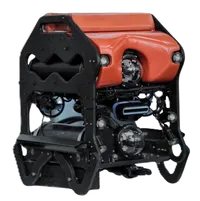
In 2024, EyeROV became the first Indian underwater robotics company to have a privately built remotely operated vehicle deployed in Antarctic waters. Our SAGARA ROV was supplied to a polar research team, who operated it during a scientific expedition to document marine life under extreme polar conditions.
Pristine Data From Extreme Waters
Antarctica’s waters sit near 1.8°C, the coldest liquid seawater on Earth. These are conditions that push every piece of underwater technology to its limit. Pressure, temperature, and visibility create a combination that most underwater systems simply cannot handle reliably.
What makes polar underwater environments especially valuable for science is that the ecosystems here are largely undisturbed. Marine life behaves naturally. Organisms maintain their natural positions, their feeding patterns, their social structures. Capturing this behaviour accurately requires a tool that can enter the water without altering it.
That is what EyeROV’s underwater ROV was designed to do. We deploy compact underwater ROVs to see, record, and document aquatic environments in their natural state. Our remotely operated vehicles operate in conditions where accurate data collection has historically been extremely difficult, delivering footage and readings in pristine condition.
What SAGARA Captured: Polar ROV Deployment in Antarctic Waters
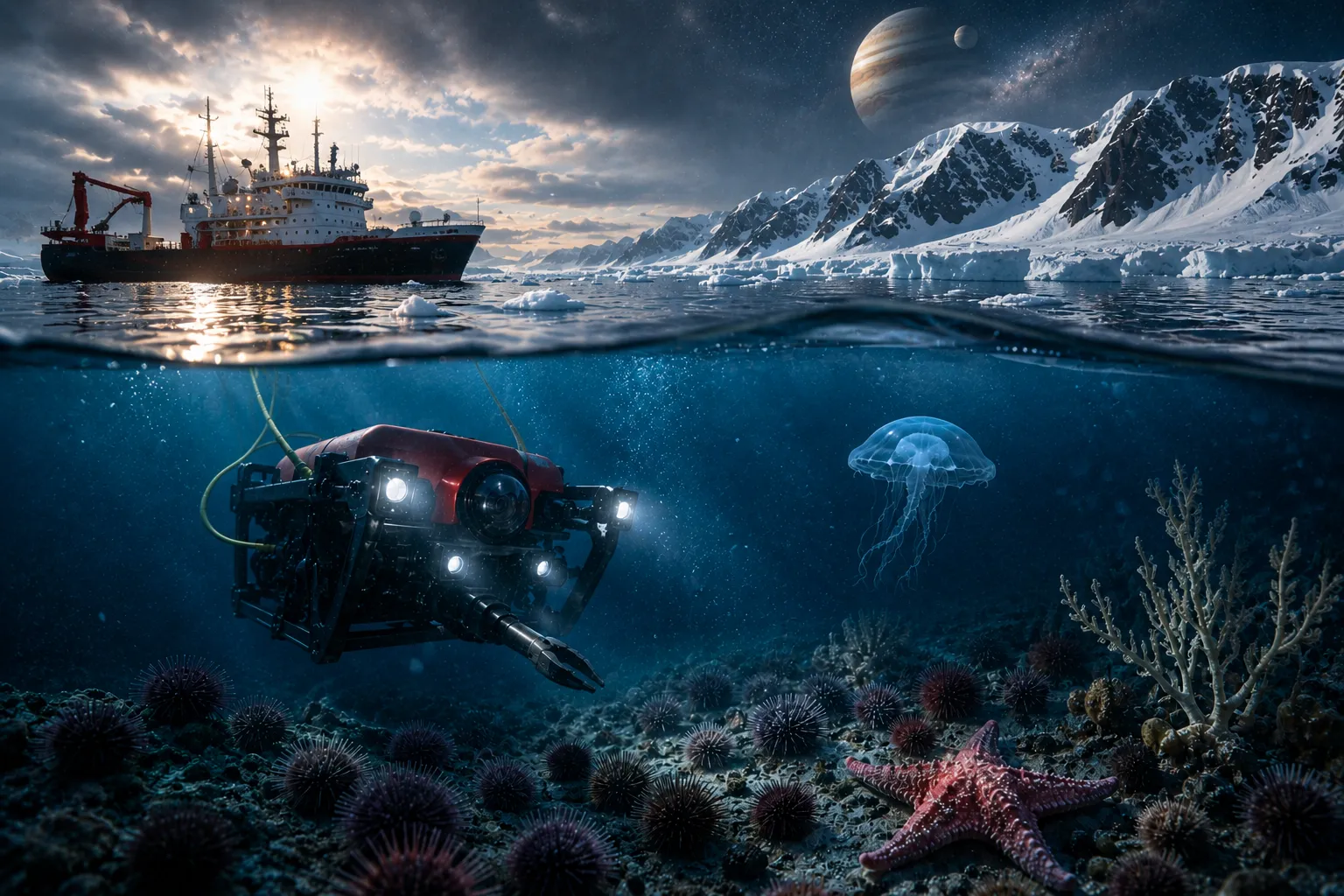
EyeROV’s underwater ROV SAGARA was deployed in Antarctic waters. The EyeROV SAGARA descended silently to the Antarctic lake floor, transmitting high-definition footage in real time. What it recorded was a complete, undisturbed snapshot of polar marine life, exactly as it exists.
Sea Urchins (Class: Echinoidea)
Hundreds of dark red and purple sea urchins covered the Antarctic lake floor in dense, coordinated clusters, grazing naturally, exactly as they do when undisturbed. Sea urchins have existed for over 300 million years, surviving every mass extinction by maintaining the benthic ecosystems around them. They also communicate and form coordinated foraging groups, a behaviour that is extremely difficult to observe and record because it collapses at the slightest environmental disturbance. SAGARA filmed it intact.
Sea Star (Class: Asteroidea)
A pale pink sea star rested on the substrate among the urchin populations, five arms, fully extended, entirely at ease. Sea stars are keystone predators of polar benthic communities. The footage captured predator and prey in the same undisturbed frame, a record of how this ecosystem functions naturally.
Jellyfish (Class: Scyphozoa)
As SAGARA panned upward from the Antarctic lake floor into open water, a transparent jellyfish drifted through the frame, unhurried, unaware. In a single uninterrupted dive, EyeROV’s underwater ROV surveyed both the community and the open water column. No resurfacing. No second deployment. This kind of operational flexibility is what makes remotely operated underwater vehicles essential for polar marine research.
Additional Benthic Life
The footage also captured branching sessile structures and small rounded forms across the substrate. Exact species identification needs specialist taxonomy. What matters here is that they were recorded in their natural, undisturbed state, a pristine visual record of life on the Antarctic lake floor.
The entire visualisation record from this polar ROV deployment meets a standard of ecological accuracy that has been extremely difficult to achieve in Antarctic waters until now.
Why This Matters: From Polar Waters to Every Extreme Environment
Antarctica is EyeROV’s proving ground. But what gets proved there has implications that reach much further.
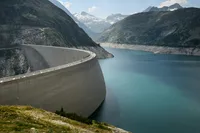
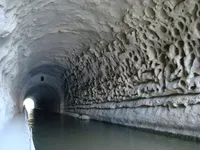
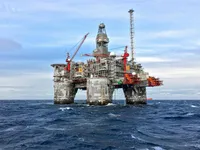
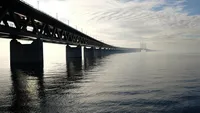
Every underwater environment where access is limited, conditions are harsh, or ecological sensitivity is high needs the same capability that SAGARA demonstrated in Antarctic waters. The ability to operate a remotely operated vehicle in near-freezing water, navigate without surfacing, observe without disturbing, and transmit in conditions that make conventional survey methods impractical. Whether that environment is a polar lake floor, a deep-sea pipeline corridor, a contaminated port, or a flooded tunnel, the principle is the same: deploy the ROV, capture pristine data, and bring it back.
Scientists have confirmed that Jupiter’s moon Europa holds a vast liquid ocean beneath kilometres of ice. Any vehicle that one day enters a sub-ice ocean beyond Earth will need to do exactly what SAGARA already does. EyeROV has not been to space. But every polar deployment builds the experience that future sub-ice exploration, wherever it happens, will need. We are learning, in the coldest water on Earth, what it takes to go where no one has gone before.
What EyeROV’s Polar Deployment Proves
For research organisations, marine scientists, and offshore industry professionals evaluating underwater ROV inspection capabilities, the Antarctic deployment demonstrates something specific.
EyeROV’s underwater ROV systems operate reliably in the most extreme aquatic conditions on the planet. If SAGARA can capture pristine, undisturbed footage in Antarctic waters at near-freezing temperatures, it can deliver the same quality of data in your environment. From offshore oil and gas operations to dam and tunnel surveys, from ship hull inspections to marine research expeditions, EyeROV’s ROV operations are built for real-world conditions, not controlled environments.
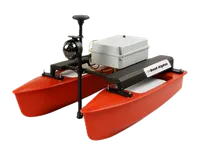
Our systems include the EyeROV TUNA, a high-performance observation-class ROV, the EyeROV SAGARA, a military-grade ROV for deep-sea missions, and the iBoat Alpha, an autonomous surface vessel for remote monitoring. All supported by EVAP, our AI-powered underwater visualization and analytics platform.
The Ice Is Waiting
There are places in this world that have never been honestly seen. Not for lack of curiosity. For lack of a tool capable of reaching them and bringing back what it finds, unchanged.
EyeROV builds those tools. Compact, quiet, capable. Built for the most extreme waters on Earth, and for science that deserves pristine data.
EyeROV systems see what you cannot reach.
If you are planning an underwater survey in extreme or ecologically sensitive environments, our team can help you evaluate whether ROV-based visualisation and data collection is the right approach for your operations. Start a conversation with EyeROV.
To learn more about remotely operated vehicles and how they work, read our guide: What is ROV? Meaning, Types and How It Works Underwater.
Reference: