






SONAR Pipe Inspection: How It Works for Submerged Pipelines
Learn how SONAR pipe inspection works for submerged and water-filled pipelines. Explore the benefits of SONAR profiling, key applications, and how it compares to CCTV.
A large portion of the world’s pipeline infrastructure operates underwater. Outfall systems, marine intake lines, stormwater networks, and industrial water pipelines spend their entire service life submerged or filled with water. Conventional inspection tools like CCTV crawlers depend on light and visibility. In flooded or turbid pipelines, neither exists.
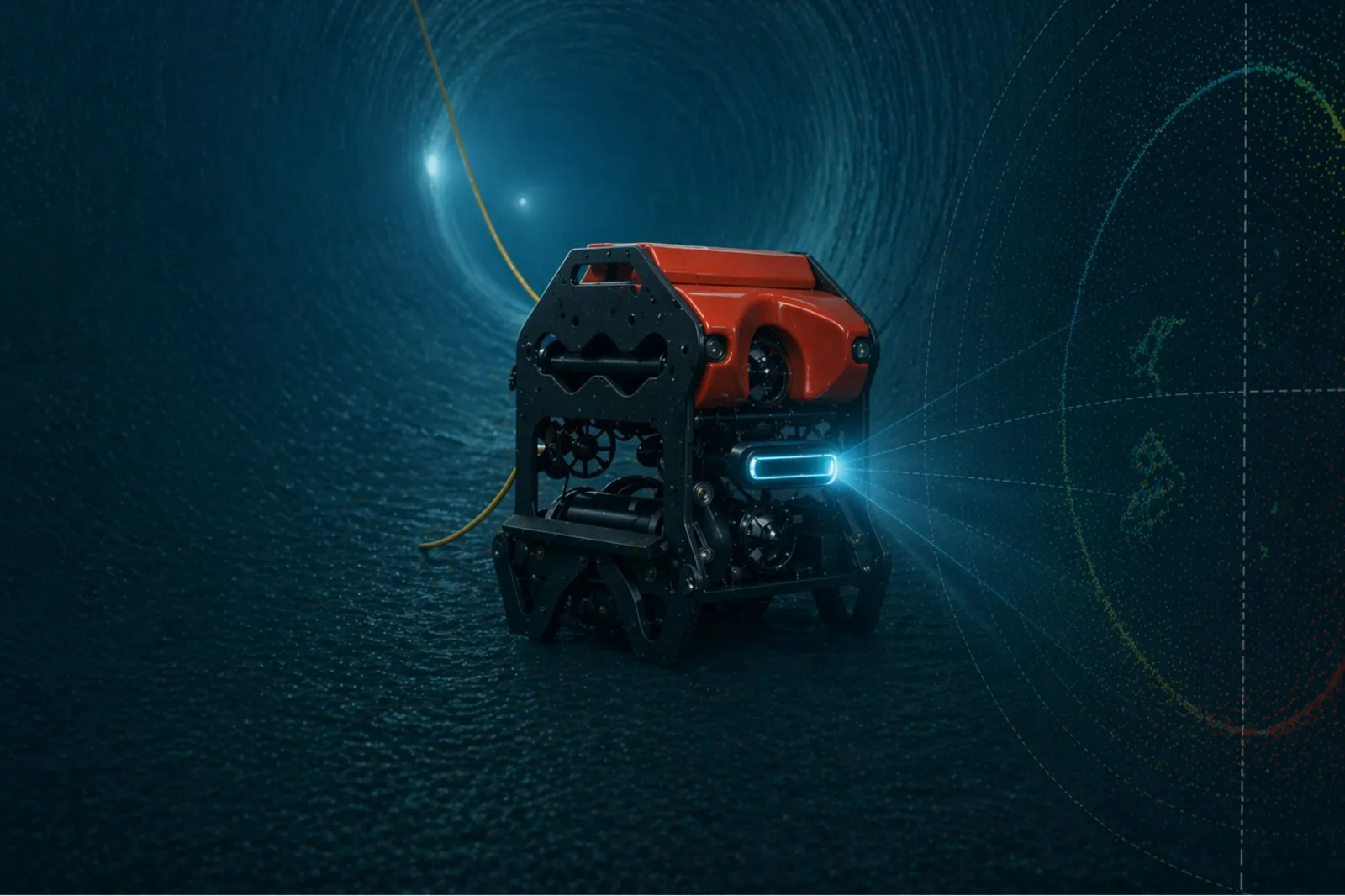
SONAR pipe inspection solves this problem by using sound instead of light. A SONAR transducer emits acoustic signals through water. These signals reflected from the internal pipe surfaces are received back as echo signals, which are then processed into usable data, building precise cross-sectional profiles and detailed 3D models of the pipe interior. This method operates without the need for external lighting or pipeline dewatering.
What Is SONAR Pipe Inspection
How SONAR Technology Works Inside Submerged Pipelines
The SONAR head rotates 360 degrees inside the pipe, firing acoustic signals across the full circumference. Each return signal records the distance to the pipe wall, sediment bed, or any obstruction present in the line. The collected data are stitched together into a detailed profile that reveals deformations, anomalies, and material buildup with a level of detail that optical cameras cannot achieve in submerged conditions.
The resulting SONAR profiles give pipeline maintenance engineers a clear, measurable picture of internal pipe geometry. This data supports decisions about repair, cleaning, or replacement based on evidence rather than assumption.
Why SONAR Is Used for Water-Filled Pipelines
Challenges of Inspecting Submerged or Water-Filled Pipelines
A significant portion of critical infrastructure operates in conditions that make traditional inspection methods nearly impossible. CCTV crawlers need clear water and adequate lighting. In flooded pipelines affected by tidal movement, continuous flow, or heavy sediment, visibility drops to zero. Dewatering these systems is not only costly, it often demands. shutting down operations entirely, which is impractical for pipelines serving active facilities like power plants, ports, or municipal water systems.
How SONAR Overcomes Low Visibility Conditions
Sound travels through water regardless of turbidity, darkness, or suspended sediment. A SONAR transducer operates the same way in zero-visibility conditions as it does in clear water. This makes SONAR inspection for water-filled pipes the standard approach for assets that cannot be drained or visually inspected. Where optical systems fail, SONAR continues to deliver accurate, engineering-grade data.
Benefits of SONAR Pipe Inspection
Accurate Pipe Profiling and Deformation Detection
Pipeline SONAR profiling maps the exact internal shape of a pipe, detecting ovality, joint displacement, encrustation, and wall deformation with precision that supports real engineering decisions. Instead of relying on estimates or scheduled replacements, maintenance teams can prioritise repairs based on measured condition data.
Identifying Sediment, Debris, and Blockages
Sediment accumulates gradually inside submerged pipelines, reducing flow capacity, accelerating deterioration, and building toward blockages that can cause system failures. SONAR pipeline condition assessment captures the depth of siltation, location of debris, and severity of blockages. It converts an invisible problem into a measurable, actionable dataset.
SONAR vs Traditional Pipe Inspection Methods
Limitations of CCTV in Submerged Pipelines
CCTV inspection works well in dry, accessible pipelines where cameras have clear sightlines. In submerged or water-filled lines, however, crawlers cannot navigate flooded sections and cameras produce unusable footage in turbid water. If dewatering is the prerequisite for inspection, operators have already accepted significant cost and operational downtime before the inspection even begins.
Combining SONAR with Multi-Sensor Inspection Systems
SONAR and CCTV are not competing technologies. They are complementary. Where conditions allow partial drainage or sections of clear water, combining SONAR profiling with optical imaging gives engineers a complete picture that neither technology produces alone. Robotic underwater inspection platforms can carry both SONAR and camera sensors in a single deployment, reducing inspection time while capturing a broader range of condition data. This multi-sensor approach is increasingly common in underwater pipeline inspection technology programmes managing ageing infrastructure.
Applications of SONAR Inspection in Marine Infrastructure
Submerged Pipelines and Outfall Systems
Wastewater outfalls, cooling water discharge lines, and stormwater drains spend their entire service life submerged. SONAR pipeline condition assessment lets operators inspect these assets in live conditions, with no shutdowns, no dewatering, and no operational disruption. For ageing infrastructure under increasing regulatory scrutiny, this capability is critical.
Ports, Offshore Structures, and Industrial Water Pipelines
Seawater intakes, ballast lines, and port infrastructure pipelines are permanently submerged and permanently essential. Power plants, desalination facilities, offshore oil and gas installations, and chemical processing plants all depend on pipelines that cannot be taken offline for inspection. Marine pipeline inspection technology using SONAR keeps these assets monitored and maintained without interrupting operations.
Choosing the Right Technology for Submerged Pipeline Inspection
The right inspection technology depends on the specific conditions of each pipeline. Key factors include whether the pipeline is fully submerged or partially drained, the level of turbidity in the water, the diameter and accessibility of the pipe, and the type of condition data required.
For assets that are permanently submerged or impractical to dewater, SONAR is the baseline technology. Where partial access exists, pairing SONAR with complementary sensors like cameras or UT probes closes data gaps. The most effective inspection programmes match the technology to what the pipeline actually demands rather than defaulting to familiar methods.
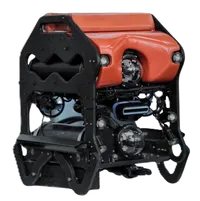
EyeROV builds robotic underwater inspection platforms designed for exactly these environments. Our ROV systems, including the EyeROV TUNA, can carry profiling SONAR as a payload for subsea pipeline inspection. Combined with EVAP for post-inspection data processing and reporting, this gives operators a complete pipeline inspection solution for assets operating below the waterline.
See the True Condition of Your Pipeline
The pipelines that are hardest to inspect are often the ones most in need of it. SONAR inspection removes the guesswork, turning invisible conditions into engineering-grade data that supports real maintenance decisions.
If your pipelines operate below the waterline and conventional inspection methods are not delivering the data you need, talk to the EyeROV team. We can help you evaluate whether SONAR-based robotic inspection is the right approach for your assets.
To learn more about how remotely operated vehicles work in pipeline environments, read our guide: What is ROV? Meaning, Types and How It Works Underwater.
Frequently Asked Questions
What is SONAR pipe inspection?
SONAR pipe inspection uses acoustic signals to map the interior of submerged or water-filled pipelines, generating precise cross-sectional profiles without requiring light or optical visibility.
How does SONAR inspection work in submerged pipelines?
A rotating SONAR transducer emits sound waves that reflect off internal pipe surfaces. The return signals are processed into detailed profiles showing pipe geometry, sediment levels, and structural anomalies.
Why is SONAR used instead of CCTV for underwater pipe inspection?
CCTV depends on light and clear water, conditions that rarely exist in submerged pipelines. SONAR functions regardless of turbidity or darkness, making it the only viable inspection method in many underwater pipeline scenarios.
What are the benefits of SONAR profiling for pipelines?
SONAR profiling delivers accurate dimensional data, detects deformation, quantifies sediment buildup, and identifies blockages, all without dewatering the pipeline or taking it out of service.
Can SONAR detect blockages or sediment buildup inside pipes?
Yes. SONAR maps the distance between the sensor and every surface it encounters, making sediment accumulation, debris, and blockages clearly visible in the resulting profile data.