





Underwater Pipeline Inspection with ROVs
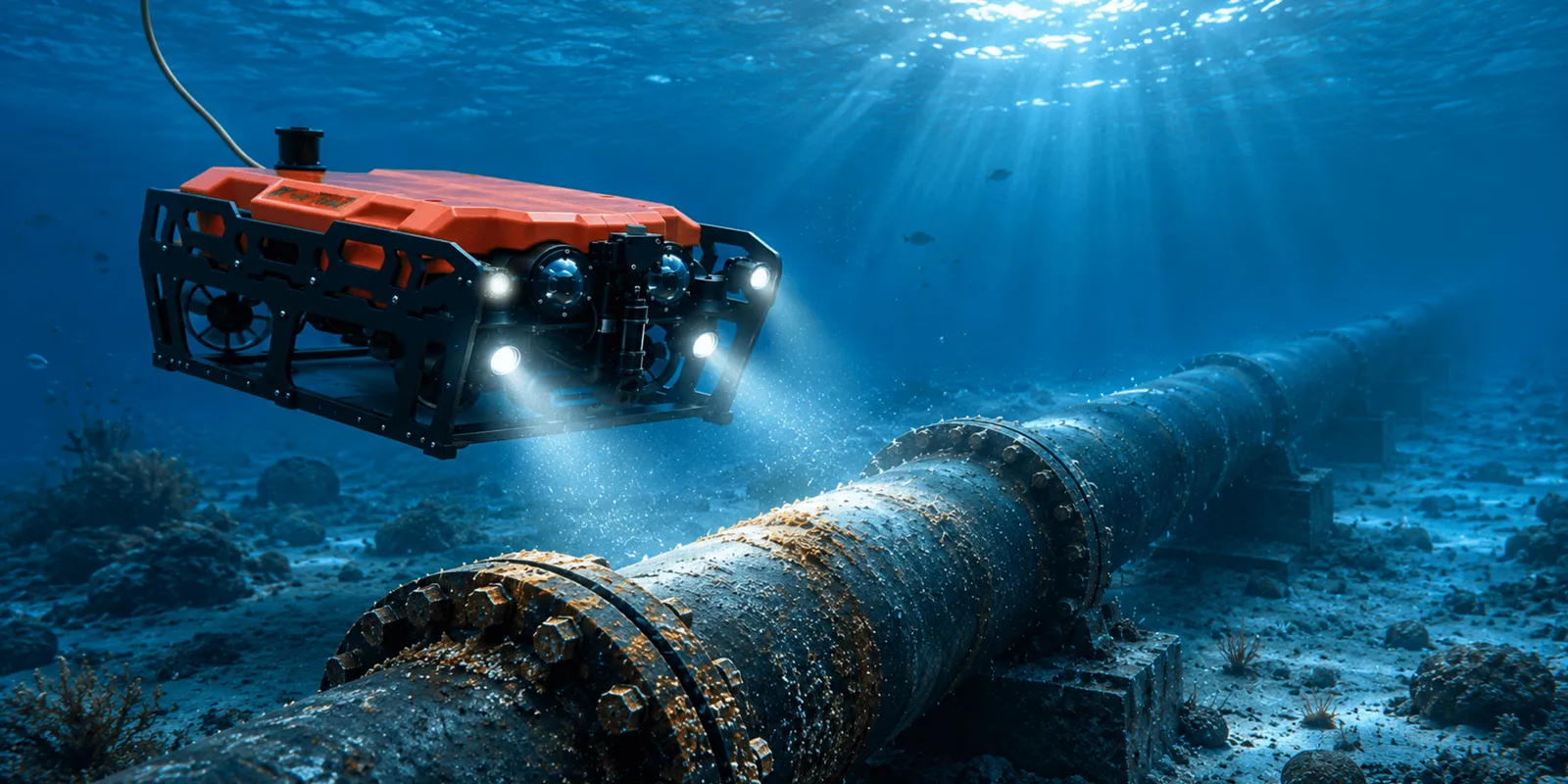
Underwater pipeline inspection with ROVs detects corrosion, leaks, and free spans without divers. See how the workflow runs and where ROVs fit best, with EyeROV.
Corrosion is now the leading cause of gas pipeline failures in Europe, according to EGIG incident data. Underwater pipeline inspection is the assessment of submerged pipelines for corrosion, mechanical damage, coating loss, leaks, and structural displacement, carried out by a remotely operated vehicle that travels along the pipeline route capturing video, sonar imagery, and sensor data. For submerged lines, seawater and shifting seabed raise that exposure further. This blog explains how ROV-based inspection works, what it detects, and when it fits better than inline tools (PIGs) or divers.
Why underwater pipelines need regular inspection
Three forces drive inspection schedules. The first is regulation. In India, the Petroleum and Natural Gas Regulatory Board (PNGRB) sets integrity rules for oil and gas pipelines, while water transmission mains follow Bureau of Indian Standards (BIS) guidance, and most countries run equivalent regimes. The second is physical risk. Steel pipelines rely on external coatings and cathodic protection to hold off corrosion, and that protection weakens as a line ages, so older pipelines need closer attention. The third is cost. A single rupture can run into crores once you add clean-up, compensation, and lost supply downstream. Inspection cadence reflects this. Active subsea oil and gas pipelines usually get an annual external visual survey, water transmission mains run on three-to-five-year cycles, and any line should be checked right after a seismic event or major storm.
How ROV pipeline inspection works
An ROV pipeline inspection runs in four stages, from planning through to reporting, and each one feeds the next. Here is how we work through them.
Survey planning
We start by mapping the pipeline route, its depth profile, expected currents, and likely visibility. That tells us which sensors to fit. An HD camera goes on every job. We add multibeam sonar for buried sections, an ultrasonic thickness gauge where steel wall loss is suspected, and cathodic protection probes on coated lines.
Tracking and following the pipeline
We launch the ROV from a vessel or the bank, then pick up the pipeline at a known point and follow it using visual reference and magnetic pipe tracking. Where the line is buried under sediment, magnetometers or sub-bottom profilers let us trace its position and depth of cover.
Data capture
The ROV records continuous HD video along the full length. We stop at field joints, anodes, valves, tees, and any visible anomaly for a closer look. Sonar mosaics cover free spans and crossings, and we log wall thickness readings at set intervals or wherever something looks wrong.
Post-inspection analysis
After the survey, the data is processed in a visualising platform to sharpen imagery, generate 2D and 3D visualisations, and produce the deliverables. Asset owners review pipeline conditions and findings through the platform. Each anomaly is tagged and mapped to its location with GPS coordinates and chainage from the start point, and anything urgent is escalated immediately. The final report supports maintenance planning, repair prioritisation, and future inspection programmes.
What ROV pipeline inspection detects
External corrosion and pitting are the most common findings. Rust, scale, and breakdown in the protective coating show up on camera, and our ultrasonic gauges measure how much wall thickness has been lost. We cover this in more detail in our guide to corrosion in underwater pipelines.
Coating damage and disbondment come next. Cracked, missing, or lifted coating exposes the bare steel underneath, which then becomes a corrosion site if it is left unattended.
Free spans are stretches where the seabed beneath the pipe has been scoured away, leaving it unsupported. A long free span flexes with the current and can crack from fatigue, so we measure span length and flag the sections that need support.
Burial verification confirms whether the pipeline still sits at its original depth or has worked its way to the surface as sediment shifts around it. Sections that have lost safe cover get flagged for reburial or protection.
Field joint damage and anode depletion need separate tracking. Joint coatings and sacrificial anodes wear out faster than the pipeline body, so we check their condition on every survey.
Leaks and product release are the most urgent findings. Visible plumes, rising bubbles, or a telltale sonar signature all point to loss of containment, and we flag and locate them precisely.
ROV inspection compared with inline inspection (PIGs) and diver surveys
Each method answers a different question, so the choice depends on what you need. ROV inspection is the strongest option for external conditions: free spans, coating damage, marine growth, burial, and any survey where the pipeline has to stay in service. What it cannot do is read the internal wall from the inside.
A pipeline inspection gauge, or PIG, is the opposite. It travels inside the line and measures internal wall condition, internal corrosion, and dents, but the pipeline has to be cleaned and fitted to launch and receive it, and a PIG tells you nothing about external appearance, free spans, or burial.
Diver surveys suit fine manipulation tasks such as operating a valve or making a small repair in shallow water. Many modern work-class ROVs also carry manipulator arms and can perform some of these intervention tasks, often at greater depths and with lower safety risk. For routine inspection of long runs, the cost, safety risk, and depth limits of diving usually make it less practical. The answer is often a combination: ROV for the outside and PIG for the inside, with our team covering the ROV side.
EyeROV pipeline inspection in practice
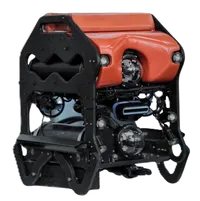
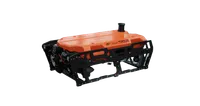
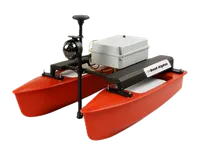
For pipeline work, we match the vehicle to the site. EyeROV TUNA handles shallow inland and inshore lines, while EyeROV SAGARA goes deeper for subsea pipelines offshore. For inspecting the inside of large-diameter pipelines, culverts, and pipeline sections that run through confined or enclosed structures, we deploy EyeROV TSROV, which is built for navigation in restricted spaces. Across these platforms we fit the payloads a full survey needs: HD cameras, multibeam sonar, ultrasonic thickness gauges, and cathodic protection probes. The data feeds straight into EVAP for review and reporting.
A typical scope covers route tracking, continuous video, sonar over free spans and crossings, wall thickness sampling, and a tagged anomaly report with repair priorities. We size each programme to the asset, from a single harbour crossing to a long offshore export line. The full service sits on our underwater pipeline inspection services page, alongside our offshore oil and gas inspection work.
Working with EyeROV
We handle the whole job: deployment, piloting, data capture, post-inspection analysis, and the final report. The first step is a short site discussion so we can scope the sensors you need and work out access and logistics before mobilising. We also advise on inspection intervals and on avoiding the common gaps behind pipeline and tunnel inspection failures. If you have a pipeline due for inspection, contact EyeROV to start that conversation.
Frequently asked questions
What is underwater pipeline inspection?
Underwater pipeline inspection is the assessment of submerged pipelines for damage, corrosion, coating loss, free spans, and leaks. It is carried out by a remotely operated vehicle that travels along the pipeline capturing HD video, sonar imagery, and wall thickness measurements. The inspection runs without taking the pipeline offline.
How long does an ROV pipeline inspection take?
Inspection rate depends on water visibility, current, and pipeline diameter. In clear water with low current, an ROV can survey several kilometres per day at the detail needed for anomaly detection. Longer pipelines are covered over multi-day campaigns, with overnight data review built in.
Can ROVs inspect buried pipelines?
Yes, with the right sensors. Cameras cannot see through sediment, so buried sections are tracked with magnetometers or sub-bottom profilers mounted on the ROV. These detect the pipeline’s position and depth of cover, flagging sections where erosion has reduced burial below safe thresholds.
Is ROV inspection used for regulatory compliance?
Yes. The Petroleum and Natural Gas Regulatory Board (PNGRB) sets integrity management requirements for oil and gas pipelines in India, and ROV external surveys produce the documented condition records these programmes rely on. Timestamped video, position data, and anomaly logs form the audit trail for the inspection.
How often should an underwater pipeline be inspected?
Active subsea oil and gas pipelines are typically inspected externally every one to two years. Water transmission mains follow three-to-five-year cycles. Any pipeline should be checked immediately after a seismic event, storm, anchor strike, or unexplained pressure drop.