






Underwater Recovery: A Complete Guide to Methods & ROVs
Learn how underwater recovery missions work, from search techniques and equipment to the challenges divers face and how ROVs make recovery faster and safer.
What is underwater recovery?
Underwater recovery is the planned process of locating and retrieving submerged objects or assets, sunken vehicles, dropped equipment, lost cargo, forensic evidence, or, in the most serious cases, a missing person, from rivers, lakes, harbours, dams, or the open sea. What sets it apart from routine diving is that it is mission-driven and often carries legal, safety, or humanitarian weight. For emergency responders, naval and coast guard units, port authorities, and industrial operators, a dependable underwater recovery capability protects lives, preserves evidence, and safeguards assets.
Underwater recovery vs search and rescue operations
Search and rescue and recovery are closely linked but pursue different goals, and the distinction shapes how a mission is planned, paced, and equipped.
Objectives of search missions
A search is driven by urgency: locate the target, a person, a vessel, or lost equipment, as fast as possible, since the chance of rescue falls sharply with every passing minute.
Objectives of recovery missions
Recovery replaces speed with precision. The aim is to bring the target back intact, protect any forensic or structural evidence, and document the scene, following strict protocols for marking, lifting, and surfacing.
When search operations transition to recovery
A mission shifts from search to recovery when survival is no longer realistic, or the target is confirmed to be equipment, evidence, or wreckage rather than a living person. Urgency then gives way to methodical documentation and chain-of-custody discipline.
Common types of underwater recovery operations
Recovery covers many situations, but most missions fall into three broad categories.
Vehicle and vessel recovery
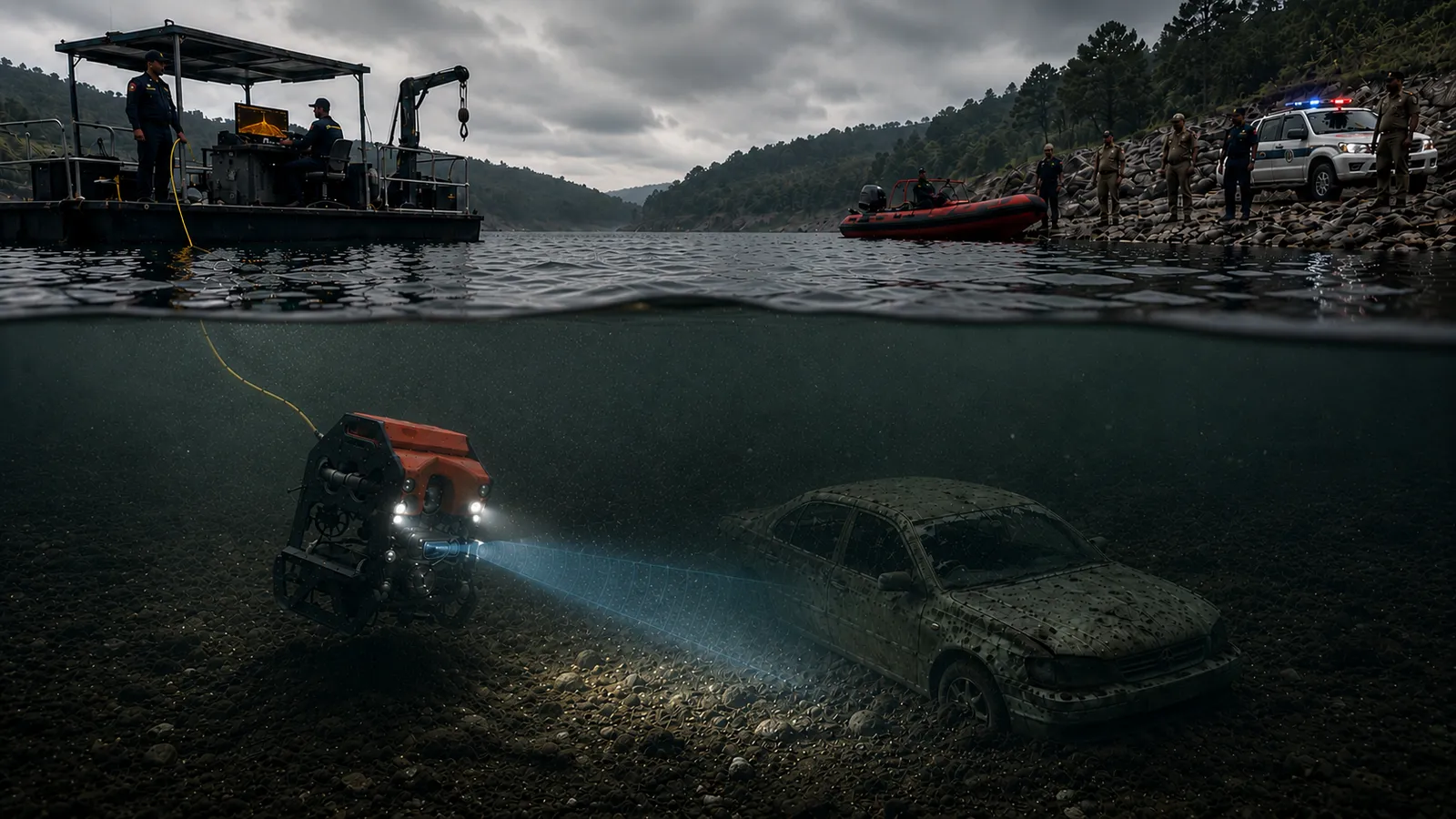
Locating and lifting cars, boats, or larger vessels that have sunk. Teams confirm the position, assess weight and stability, and plan a controlled lift using lift bags, cranes, or tow lines, since a poorly planned lift risks injury and further damage.
Evidence and asset recovery
Law enforcement and industrial operators recover weapons, stolen goods, or high-value assets from the seabed or riverbed. These demand careful documentation and minimal disturbance, since an item’s position and condition can carry legal or commercial weight.
Disaster and emergency response recovery
After floods, capsizings, or industrial accidents, teams retrieve people, equipment, and debris, often in chaotic, low-visibility conditions where rapid but safe deployment supports the wider emergency response.
Techniques used in underwater recovery missions
With visibility often poor, teams rely on structured search patterns that cover an area methodically. The right pattern depends on water conditions, the size of the zone, and the target.
Grid search method
A grid, or parallel-line, search divides the area into evenly spaced lanes covered one after another, like mowing a lawn. It gives thorough, repeatable coverage and suits larger, open areas.
Circular search method
In a circular search, the diver or vehicle works outward from a fixed central point on a guide line that lengthens with each pass. It suits smaller areas with a known reference point, such as an object’s last-seen position.
Tow and large-area search methods
For wide or deep zones, tow-based methods drag a sensor, camera, or sonar payload behind a vessel to scan long stretches quickly. They cover far more ground than manual searching and usually run as a first pass before closer inspection.
Challenges in underwater recovery operations
Even with careful planning, three challenges recur across almost every recovery mission.
Low visibility and murky water conditions
Many recovery sites, rivers, harbours, flood zones, hold water clouded by sediment, algae, or debris, where divers may see only a few centimetres ahead. This makes manual searching slow and risky, and it is where sonar becomes indispensable for seeing through opaque water.
Depth and environmental constraints
Greater depth brings higher pressure, cold, stronger currents, and stricter decompression limits. All of these reduce how long a diver can safely work, which exhausts a team quickly and shrinks the mission’s available time.
Time-critical decision making
Teams work against narrow weather windows, families awaiting answers, and hard deadlines. Decisions on where to search and how to lift a target must be quick and accurate, often with incomplete information.
Equipment used for underwater recovery
Modern recovery uses a layered toolkit of sensing, visual confirmation, positioning, and physical retrieval to locate a target, verify it, and bring it up safely.
Sonar scanning systems
Sonar is the backbone of underwater searching. It uses sound rather than light to detect and map objects where cameras are useless, and imaging and forward-looking sonar can identify targets at a distance in near-zero visibility. Our guide to scanning sonar explains how these systems work.
Underwater cameras and positioning tools
Once sonar narrows the location, high-definition cameras and powerful lighting confirm the target visually. Positioning aids such as a Doppler velocity log (DVL) and ultra-short baseline (USBL) system help operators hold position and pinpoint the object.
Remotely operated vehicles (ROVs)
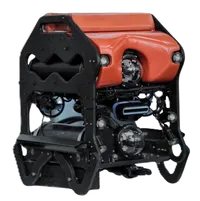
Remotely operated vehicles bring these tools together on one tethered platform. Carrying cameras, sonar, lights, positioning sensors, and even manipulator arms as payloads, an ROV can search, inspect, and assist retrieval while operators stay on the surface, connected by a tether that supplies power and a live data link.
How ROVs improve underwater recovery missions
ROVs have changed the economics and safety of recovery. They do not replace divers. They make search and recovery more effective alongside them by taking on the widest and riskiest parts of the search so divers can focus on work that needs a human.
Faster target identification
Divers typically use a slow touch-and-feel approach, covering a small area at a time, while an ROV scans a far wider area with sonar in a fraction of the time. That speed matters. A submerged body or object drifts with the current, so the longer a search runs, the further it moves, and covering ground quickly raises the chance of finding it before it is displaced.
Safer operations for recovery teams
Sending a vehicle down first keeps divers out of the water until a target is confirmed. This is vital in hazardous settings, under ice, in contaminated water, in strong currents, or at depths needing long decompression, where every avoided dive lowers risk.
Recovery in challenging environments
Some environments are too dangerous, deep, or murky for routine diving. Here ROVs do their best work: operating in zero visibility with sonar, holding position in current, and reaching depths that strain divers. EyeROV’s search and rescue systems pair forward looking multibeam sonar, cameras, precision lighting, and manipulator arms as mission payloads to locate and help recover targets in exactly these conditions.
Recovery missions also produce records that matter afterwards. Sonar coverage maps, position logs, and video from each pass feed into mission planning for the next search sector, and the documented findings support the legal and procedural side of recovery work. Inspection and survey data from our systems can be processed through the EVAP platform into structured, reviewable records.
Built for missions where every second matters
For search and recovery work, we deploy the EyeROV SAGARA. It sets up and enters the water quickly, streams live video and sonar to the operator on the surface, and holds position in current while a target is confirmed and retrieval is planned. Police recovery units, disaster response teams, coast guard operations, and port authorities use this combination of live visibility and payload flexibility to make decisions during the mission, not after it.
To discuss a search and recovery requirement, contact EyeROV.
Frequently asked questions
What is underwater recovery?
It is the planned process of locating and retrieving submerged objects, assets, evidence, or people from rivers, lakes, harbours, dams, and the open sea.
What is the difference between search and rescue and recovery operations?
Search and rescue focuses on saving lives quickly. Recovery retrieves objects, evidence, or remains with precision, usually after the rescue window has passed.
What equipment is used in underwater recovery?
Sonar, high-definition cameras, lighting, positioning systems such as DVL and USBL, lift bags, tow lines, and ROVs fitted with manipulator arms.
How are underwater recovery missions conducted?
Teams plan the operation, define the area, and apply a search pattern to locate the target, then document, secure, and lift it in a controlled ascent.
What challenges affect underwater recovery operations?
Low visibility, depth, pressure, strong currents, cold, decompression limits, and time pressure all make recovery demanding and slow manual searching.
How does sonar help in underwater recovery?
Sonar uses sound rather than light, detecting and mapping objects in murky or zero-visibility water and helping narrow a search before closer inspection.
Why are ROVs used in recovery missions?
ROVs let teams search, inspect, and assist retrieval from the surface, speeding identification, keeping divers out of hazardous conditions, and reaching unsafe depths.
Can underwater recovery be performed in murky water?
Yes. Sonar-equipped ROVs locate and identify targets where visibility is effectively zero, a main reason the technology is now standard on demanding missions.
What industries use underwater recovery services?
SAR agencies, coast guard and naval units, police underwater teams, disaster response, port authorities, marine survey teams, and recovery contractors.
How do ROVs improve search and recovery efficiency?
They deploy in minutes, scan wide areas with sonar, and stream live video, cutting search times and reducing diver fatigue, risk, and overall mission cost.