





5 Reasons Why Ship Hull Inspection Should Be a Priority
Learn why ship hull inspection is critical for vessel safety, fuel performance, and regulatory compliance. Explore inspection methods, timing, and modern ROV technology.
A ship hull inspection is the structured examination of a vessel’s submerged structure to assess its physical condition, coating integrity, and the presence of damage or marine growth. Everything below the waterline, including shell plating, welds, propeller, rudder, sea chests, and sacrificial anodes, falls within the scope of a hull inspection.
Ships spend most of their operating life in seawater, which degrades the hull through corrosion, biological fouling, and physical wear. Classification bodies like ABS, DNV, and Lloyd’s Register require hull inspections on fixed schedules. For fleet managers and shipping companies, skipping these inspections is not just a regulatory risk. It is an operational and financial one.
Why Ship Hull Inspections Are Essential
1. Ensuring Structural Integrity
Every voyage subjects the hull to wave stress, cargo weight shifts, port impacts, and temperature variation. Over time, this causes fatigue cracking at welds, progressive thinning of steel plating, and localised deformation that is invisible from above the waterline.
A regular ship hull damage inspection catches these issues while they are still manageable. A hairline crack found at a berth costs a fraction of what it costs after propagating through a structural weld. Ships that skip routine in-water inspections often end up in emergency dry docking, costing far more than a scheduled check.
2. Monitoring Hull Paint and Protective Coatings
Anti-fouling and anti-corrosion coatings take continuous punishment from abrasion, cavitation, and chemical exposure. When these coatings fail, bare steel meets seawater and corrosion begins immediately.
A ship hull corrosion inspection catches early signs of coating degradation, bubbling, peeling, or discoloration, before it progresses to steel loss. A small patch of failing paint found during a routine vessel hull inspection is a minor repair. Left for another season, it becomes plate replacement.
3. Preventing Biofouling and Invasive Species
Biofouling on ship hulls, the accumulation of barnacles, mussels, algae, and biofilm, is one of the most common and costly maintenance issues in commercial shipping. A fouled hull increases hydrodynamic drag, slows the vessel, and raises fuel consumption.
Biofouling increases fuel consumption. Fouled hulls also carry invasive aquatic species between ports, an environmental risk that ports worldwide are now actively penalising. Routine underwater ship hull inspection catches biofouling early, before removal becomes expensive and before regulatory consequences arise.
4. Improving Vessel Efficiency and Fuel Performance
A clean, well-maintained hull moves through water at designed efficiency. A fouled or damaged hull creates drag that shows up directly in fuel bills.
Studies show that even a moderate biofilm across the hull can increase fuel consumption by 10% to 25%. For large commercial vessels, this translates to hundreds of thousands of dollars in excess fuel costs annually. The IMO now tracks vessel emissions through its Carbon Intensity Indicator (CII), so a poorly maintained hull can directly affect a vessel’s emissions rating. Regular ship hull maintenance keeps fuel costs predictable and emissions within limits.
5. Enhancing Maritime Security and Compliance
Port State Control authorities inspect vessels worldwide and can detain ships with substandard hull conditions or incomplete maintenance records. Classification societies require periodic hull surveys. Gaps in inspection history affect insurance, charter eligibility, and commercial standing.
There is also a security dimension. The underwater hull is a blind spot that has been used in documented cases to conceal contraband or attach unauthorised devices. Regular maritime vessel inspection helps identify anything that should not be there.
When Should Ship Hull Inspections Be Conducted?
Hull condition does not deteriorate on a fixed schedule. These situations require action regardless of dry dock cycle:
As part of scheduled maintenance, classification rules require a full survey every 2.5 to 5 years, with in-water inspections in between. Before official regulatory surveys, a current hull condition report reduces the risk of unexpected findings. After any underwater incident, including grounding, port contact, or debris strike, an immediate ship hull damage inspection is necessary. When fuel consumption rises without a clear operational reason, hull fouling or coating failure is often the cause. Before dry dock, a pre-dock inspection helps plan repairs accurately and saves cost during the docking period.
Common Methods Used for Ship Hull Inspection
Dry Dock Hull Inspection
The most thorough method. The vessel is removed from the water completely for full examination, thickness gauging, coating repair, and structural work. Mandatory every five years under classification rules, but it takes the vessel out of service for days or weeks, with significant cost in yard fees and lost revenue.
Diver-Based Underwater Inspection
Trained divers inspect hull condition while the vessel stays in water. This avoids dry dock costs but places divers in a challenging environment with low visibility, strong currents, and proximity to propellers. Results depend heavily on diver experience and conditions.
Underwater Inspection in Lieu of Dry Docking (UWILD)
UWILD ship inspection allows operators to complete official hull surveys without removing the vessel from the water. It is accepted by major classification bodies including Lloyd’s Register, DNV, and ABS. UWILD saves time and money while satisfying regulatory requirements, making it a standard tool in commercial fleet maintenance planning.
ROV-Based Hull Inspection
Remotely operated vehicles equipped with HD cameras, LED lighting, and sonar perform thorough underwater vessel inspection without placing divers in the water. ROV hull inspection covers hard-to-reach areas, works in low-visibility port water, and produces recorded video and image datasets that meet classification reporting standards.
How Modern Underwater Robots Are Improving Hull Inspections
Underwater inspection robots for ships have made hull assessments faster, safer, and more consistent. Where dry docking takes days or weeks, an ROV inspection completes in hours. Where divers face entanglement risk around propellers and rudders, an underwater inspection robot removes the human from the hazard entirely.
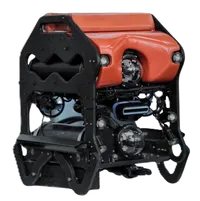
EyeROV builds inspection ROVs specifically for this work. The EyeROV TUNA is compact and manoeuvrable, built for the confined underwater geometry of working vessels at berth. It provides live HD video, deploys directly from the dock, and produces classification-standard inspection reports. Footage is processed through EVAP (EyeROV Visualization Analytics Platform), which applies AI-based image enhancement and biofouling classification to generate regulatory-ready reports.
For fleet operators, ROV-based underwater ship inspection technology means hull condition data available more frequently, at lower cost, and without taking vessels out of service.
Benefits of Regular Ship Hull Inspections
Catch problems early. Small cracks and corrosion spots are inexpensive to repair when found during routine checks. Left undetected, they escalate into plate replacement and emergency docking.
Save on long-term maintenance costs. Regular inspections prevent expensive surprises from deferred maintenance, including unplanned dry docking and regulatory penalties.
Improve vessel performance. A clean hull operates at designed efficiency, delivering better speed, lower fuel consumption, and reduced emissions.
Stay compliant and operational. A documented inspection record keeps vessels clear of Port State Control detentions and classification suspensions.
Frequently Asked Questions
Why is ship hull inspection important?
It identifies structural damage, coating failure, corrosion, and biofouling before they affect vessel safety, operational efficiency, or regulatory compliance. Regular inspection is the foundation of proactive ship hull maintenance.
How often should ship hull inspections be done?
Every 2.5 to 5 years as required by classification rules, with in-water checks in between. Additional inspections should follow any underwater incident or unexplained increase in fuel consumption.
What are the common methods of ship hull inspection?
Dry dock inspection, diver-based underwater inspection, UWILD, and ROV-based inspection using underwater robots. Each method suits different operational and regulatory situations.
What problems can hull inspections detect?
Cracking, corrosion, paint failure, marine growth, weld damage, propeller and rudder deterioration, anode depletion, sea chest blockages, and foreign objects attached to the hull.
What is underwater hull inspection?
It is the assessment of a vessel’s submerged surfaces while the ship stays in water, performed by divers or ROVs, avoiding the cost and downtime of dry docking.
If you are looking for a safer, faster approach to ship hull inspection, talk to the EyeROV team. We can help you evaluate whether ROV-based underwater inspection is the right fit for your fleet.
For a detailed technical guide on hull inspection zones, ROV systems, and real deployment case studies, read our comprehensive hull inspection guide.