





ROV vs USV: Differences, Uses and How to Pick the Right One
ROV vs USV compared: how underwater ROVs and surface USVs differ in control, tether, payloads and range, and which fits inspection, survey or SAR work.
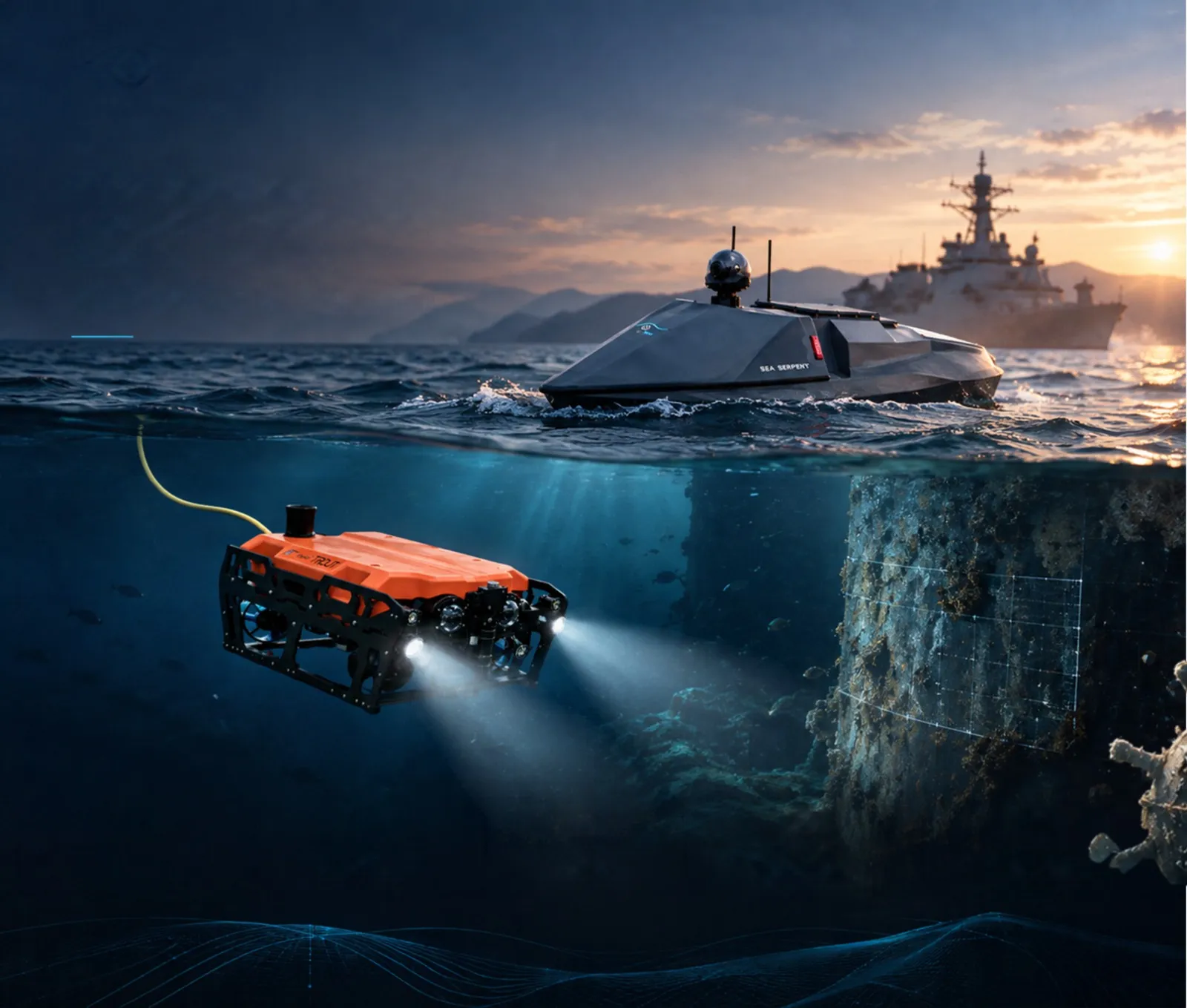
Remotely operated vehicles (ROVs) and uncrewed surface vehicles (USVs) are both marine robots, but they do different jobs. An ROV works underwater beside a structure, while a USV works on the surface and covers a wide area. This ROV vs USV guide compares the two and explains where each one fits.
What is an ROV?
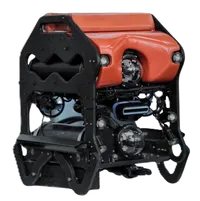
An ROV is an underwater vehicle controlled by a pilot at the surface. Sizes range from compact inspection class to large work class systems. Typically, ROVs are deployed manually, but they can also be deployed using LARS or cranes.
How does an ROV work?
A tether connects the ROV to a surface control station. It supplies power, carries the pilot’s commands down and brings live video and sensor readings back up. Thrusters let the pilot hold the ROV steady underwater. Some ROVs are pre-programmed; these are called automated ROVs. An AUV (autonomous underwater vehicle) runs without a live pilot and with no tether. The degrees of freedom of an ROV can vary from 3 to 6 DoF.
Where are ROVs used?
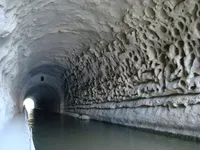
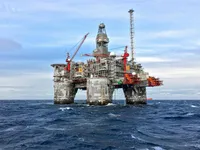
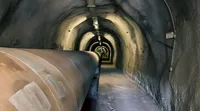
ROVs are used wherever a submerged structure has to be seen clearly or measured. Typical tasks include inspecting dams, tunnels, intakes, bridge piers, ship hulls, offshore platforms and pipelines. Read more in our remotely operated vehicle blog.
What is a USV?
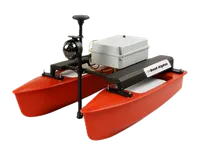
A USV, also known as an unmanned surface vessel, is a boat with no crew on board. Depending on the model, it is steered live by an operator or follows a planned route under supervision. A fully autonomous USV is often called an autonomous surface vehicle (ASV). Read more in our autonomous surface vehicle blog.
How does a USV work?
The operator plans the survey as GPS waypoints, usually as parallel lines across the site. The USV follows these lines at a steady speed and records data. In remote mode, the operator steers it over a radio link. After completing the inspection, the USV returns to a preset location or to the operator for battery replacement or charging. The battery life of a USV varies from 2 to 9 hours.
Where are USVs used?
The most common USV task is the bathymetric survey, which measures water depth and maps the shape of the bed of the water body. Common sites include coastal waters, harbours, rivers, reservoirs and quarry ponds. Many also record water quality. Defence and security agencies use them for coastal patrols.
ROV vs USV: How they differ
| Factor | ROV | USV |
|---|---|---|
| Operating environment | Underwater | Water surface |
| Control | Remotely operated / partly autonomous | Remote and/or autonomous |
| Connection | Typically tethered | Typically wireless |
| Primary role | Close inspection and intervention | Area survey and monitoring |
| Human involvement | Remote supervision or autonomy | Remote supervision or autonomy |
| Depth capability | Works below the surface, with depth ratings from 100 m to 6000 m | Works on the surface |
| Typical data | Video, sonar, UT thickness data | Hydrographic, environmental and navigation data, coastal surveillance |
Operating environment
An ROV works beside the asset and records fine detail at one spot. An ROV can inspect almost all subsea assets that require a minimum of 100 m depth.
A USV covers a whole site but cannot see a structure up close. It can act like a coast guard, recording the bottom profile of the water body as well as the surroundings with a 360 degree camera. It can detect underwater threats with sonar and surface threats through patrolling.
Control and communication
Radio signals do not travel far through water, so an ROV relies on acoustic sensors and mainly on its tether for a stable, real-time link. The real-time location of the ROV can be recorded using underwater positioning payloads. Most ROVs are positively buoyant, so even if an ROV loses its tether connection, it will return to the surface and can be tracked using the positioning payloads it carries.
A USV can use radio, cellular or satellite links for communication and control. As mentioned earlier, in most cases they are pre-programmed to navigate along a predetermined path and return, though some USVs are operated remotely or combine autonomous and remote control modes. Most return to base or continue their route if the link is lost.
Mission duration and coverage
Because a tethered ROV draws power from the surface, battery life does not limit the length of a dive, but tether length sets its reach. Battery-powered ROVs return when the battery runs out, which can vary from 2 to 9 hours. In some cases, the ROV is supported by both a battery and a tether. A USV runs on batteries or fuel, so endurance varies by model. Coverage depends on the speed of the vehicle and the water current.
Payloads and mission equipment
An ROV can carry 3D mapping sonar, forward looking multibeam sonar, laser scalers, ultrasonic thickness (UT) gauges, cathodic protection (CP) probes, underwater positioning systems, water quality sensors and other payloads as required.
While USVs can carry similar sensor types, the main difference lies in their operating realm. ROVs use subsea-rated payloads such as CP probes and UT thickness gauges designed for direct contact underwater, whereas USV sensors are tailored for surface-based monitoring and hydrographic surveys.
ROV vs USV: Advantages and limitations
Advantages of ROVs
The main advantage of an ROV is close, live access to a submerged structure. The pilot can stop and study a suspected defect from different angles. With forward looking multibeam sonar as a payload, the ROV can keep working when the water is too murky for its cameras. On hydro assets, many ROV inspections can be carried out without dewatering. Using the data recorded by the ROV, engineers can produce outputs such as 3D reconstructions or enhanced images.
Advantages of USVs
The main advantage of a USV is coverage. By holding a steady speed and even line spacing, it produces consistent depth data over large areas. It can also reach shallow reservoirs or quarry ponds where launching a boat is difficult.
Operational limitations
An ROV can only travel as far as its tether allows, and strong currents make it harder to hold position. A USV can map a site but cannot assess the condition of a submerged structure.
Which platform fits different marine missions?
Underwater inspection and maintenance
Inspection work suits an ROV. It can record cracks and corrosion on dam faces, gates, tunnels, platform legs and pipelines, and with the right payloads it can measure crack size or metal thickness. Work class ROVs can also clear debris, recover objects and perform underwater tasks.
Hydrographic and seabed surveys
Surveys that measure depth across an area suit a USV. It runs parallel lines with an echosounder, or tows a side scan sonar, to map the seabed or reservoir floor.
Search, rescue and recovery
Search and recovery often uses both. A USV with sonar can sweep a large area quickly and mark possible targets. An ROV then checks each target on camera and assists with recovery, which reduces the dives rescue teams make in cold, dark water. Read more in our underwater drones for search and rescue blog.
Can ROVs and USVs work together?
Yes. The USV shows what the bottom looks like, and the ROV shows the condition of the structures on it.
Surface-to-subsea mission coordination
A USV first maps depth and obstacles across the site. The ROV team then uses this map to go straight to the areas that need a closer look.
Combined survey and inspection workflows
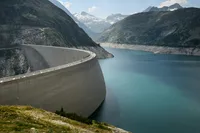
Dam inspections are a good example. A USV maps sediment build-up in the reservoir and scour in the stilling basin downstream. An ROV then inspects the upstream face, gates and intake for cracks and blockages. Read more in our ROV dam inspections blog.
Extending robotic mission capabilities
EyeROV’s EVAP post-processing platform turns ROV video and sonar data into 3D models and defect reports that engineers can compare across inspections.
How to choose between an ROV and USV
Define the mission objective
If you need to see or touch a structure underwater, begin with an ROV. If you need to measure depth or conditions across an area, begin with a USV.
Consider depth, range and endurance
Consider the water depth, the distance from the launch point and the job duration, then compare them with each platform’s limits.
Match sensors and payload requirements
List the data the asset owner or regulator expects, then confirm the platform can carry the payloads to collect it.
Evaluate operational and regulatory requirements
At sea, an ROV usually launches from a vessel or fixed platform, while a nearshore USV can often start from shore. Autonomous USVs need supervision in busy waters. Check permit rules for uncrewed vessels and security clearance for dams and defence sites.
Why ROVs remain important for professional underwater operations
A survey shows where to look. Deciding what to do about a crack still needs a clear, live view, which an ROV gives the pilot on site.
Plan your next underwater inspection
EyeROV designs and builds ROVs in India for underwater asset inspection. SAGARA, our inspection class ROV, can carry payloads such as forward looking multibeam sonar, laser scalers, DVL and CTD sensors. TUNA is used for dam inspection, and TSROV is built for long tunnel runs. Contact our team to plan your next inspection.
Frequently asked questions
Can an ROV operate without a vessel?
Yes. Compact ROVs are often launched from a shoreline, a jetty or the structure itself. TUNA, for example, can be launched from a dam crest for dam inspection. Large work class ROVs usually need a support vessel.
How deep can an ROV operate?
Offshore work class ROVs can operate at several thousand metres, while compact inspection class ROVs are built for shallower infrastructure work.
How far can a USV travel?
Range depends on the power source, hull size, communication link and sea state. Small battery-powered USVs suit nearshore and inland work, while larger fuel or hybrid USVs can operate farther offshore.