





Trash Rack Inspection Using ROV: What to Check Underwater
See how ROVs inspect trash racks underwater to find bent bars, corrosion, missing bars and debris build-up, without dewatering the intake or tunnel.
A trash rack stops logs, branches and other debris from entering the water conductor system of a hydropower plant. When a rack clogs, bends or corrodes, the plant loses head and debris can reach the gates and turbines. Most of the rack sits underwater, often in murky water, so its condition is easy to miss. This guide covers what to check and how a remotely operated vehicle (ROV) inspects a trash rack without dewatering the intake.
What is a trash rack?
A trash rack is a steel screen of parallel vertical bars, held in a frame across a water intake. The bar spacing lets water through and holds back larger debris. Racks are built in panels that slide into side guides, so each panel can be lifted out for repair.
Racks are installed at the power intake ahead of the head race tunnel or penstock, inside tunnels ahead of gates, in the forebay of canal-fed plants, and at irrigation and cooling water intakes. Cleaning machines rake debris off the face from above, but they do not show the condition of the bars and supports, or what has settled at the base.
What to check on a trash rack
- Debris packed against the face. Loading often rises in leaf-fall season and after heavy rain.
- Bent or buckled bars. A bent bar opens a wider gap that lets larger debris through.
- Corrosion and section loss on bars, welds and frames, especially on older racks.
- Broken or missing bars, often at welds cracked by fatigue.
- Panels shifted in their guides, leaving gaps at the sides or bottom.
- Silt, gravel and stones at the base of the rack and in the gate grooves. These can stop panels or gates from seating, and build up faster where the intake sits near a sloping river bed.
Why rack condition matters
A clogged rack causes head loss. Water squeezes through a smaller open area, so less head reaches the turbines and generation drops.
The same pressure difference loads the rack. It can bend bars, push panels out of shape and, in severe cases, tear support beams loose from the concrete. A fallen rack can lodge in the gate slot and stop the intake gate from closing, so the unit cannot be isolated for maintenance. Flow can also make bars vibrate, which cracks welds over time.
Once a rack is damaged, debris passes through and can strike gates or turbine parts.
Why trash racks are hard to inspect
Racks can sit tens of metres below the reservoir surface or deep inside a tunnel, far from any access point. Visibility is often poor because of silt and organic matter. The rack is also a large, repetitive structure, so without a systematic method it is easy to lose track of position and miss a defect.
Dewatering the intake to inspect in the dry means placing stop logs, closing gates and pumping out water. An ROV does the work with the intake full, during a planned window when flow is stopped.
How an ROV inspects a trash rack
- Plan the survey. The team reviews rack drawings, panel layout, bar spacing and access points. At a multi-unit powerhouse, units next to the rack being inspected are stopped to avoid cross-currents, while racks are covered in groups so the rest of the plant keeps running.
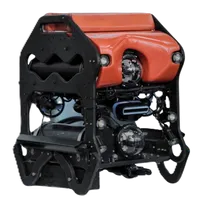
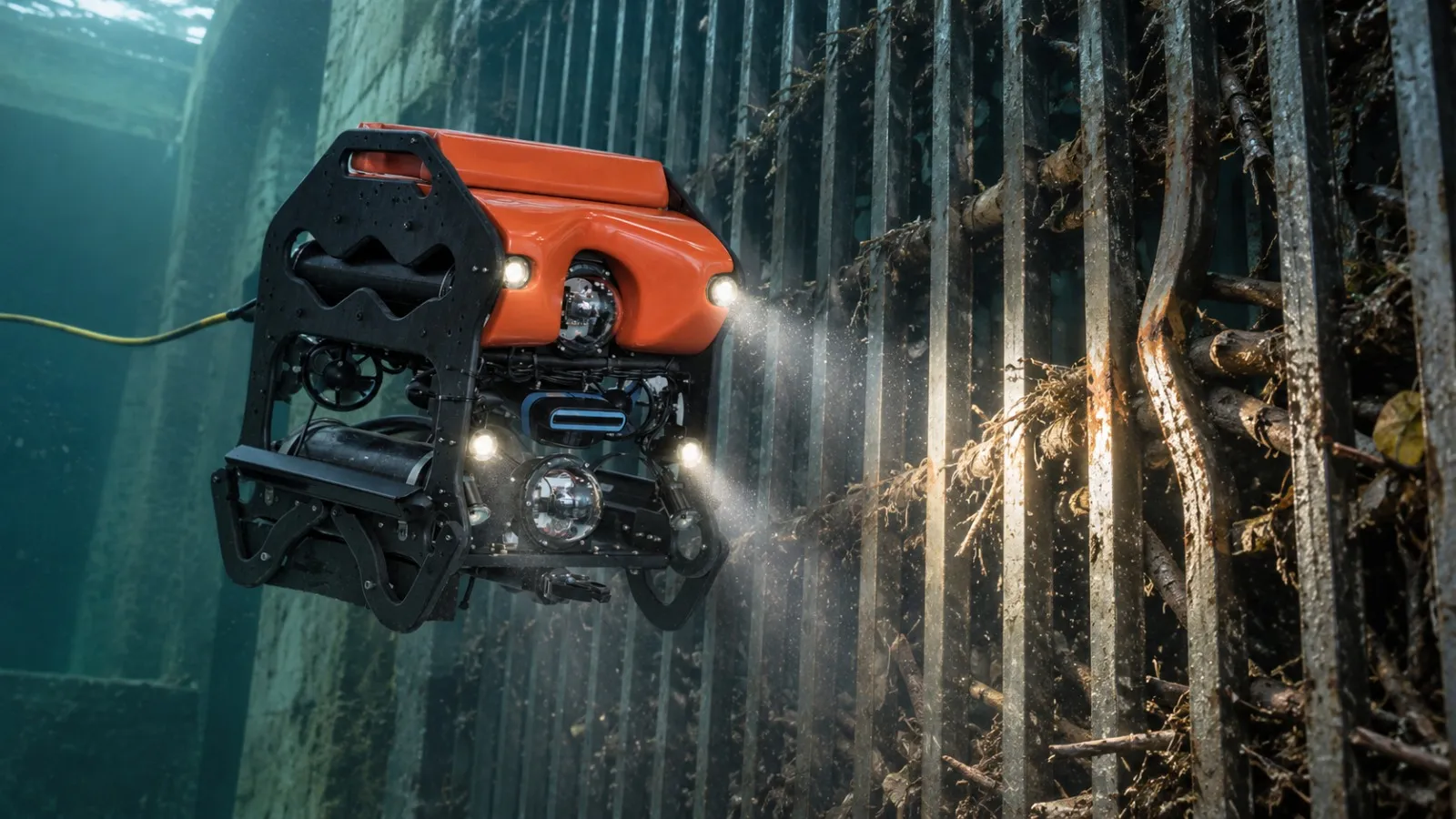
- Deploy the ROV. A compact vehicle such as the EyeROV TUNA is launched from the intake deck, forebay or a tunnel access point. For racks inside a tunnel, a long fibre-optic tether carries power and data the full distance, with careful tether management to keep it clear of the rack.
- Locate the rack with sonar. A 3D mapping sonar, carried as a payload, shows the rack and any debris pile before the camera can see them. The pilot scans each rack from a distance first and moves close only where the sonar or camera shows debris or an anomaly.
- Scan the face line by line. The ROV covers the rack in rows from top to base, recording HD video of bars, welds, frames and guides. Each frame is labelled on screen with the rack and line number, so every finding can be located later. A second camera angle shows bent bars that look normal head-on, and attachments can hold the ROV against the frame in moving water.
- Measure defects. A laser scaler projects fixed points onto the bars, so bar spacing, bends and corroded areas can be measured from the images.
- Profile debris and silt. A 3D mapping sonar records the shape of debris piles and silt at the base, and the tunnel section where the rack sits inside one.
- Check guides and grooves. The ROV inspects side guides, gate grooves and the sill for silt, stones and damage.
Sonar images need careful reading. Bars on an inclined rack can show as horizontal lines, and floating grass or air bubbles can look like debris. The camera confirms anything the sonar flags before it goes into the report.
Along with trash rack inspection, EyeROV teams also inspect service and emergency gates, intake gates, draft tubes and canals to assess their underwater condition. Our guides to dam inspection, penstock inspection and submerged tunnel inspection explain how ROVs inspect other hydropower structures.
What the inspection report delivers
- A panel-by-panel record with each finding marked on the rack drawing and linked to its video clip
- A defect log of bent, broken or missing bars, cracked welds and corrosion, with measured sizes
- Images, video and sonar views of each finding
- Debris and silt extent at the face and base
- Condition of guides, grooves and sill
- A severity rating for each finding (minor, moderate or major) with repair recommendations
EyeROV processes the footage after the survey in EVAP, which improves murky images and supports defect measurement. Using the same panel layout each time lets the plant track whether defects are growing year on year.
Frequently asked questions
Does the intake need to be dewatered?
No. The ROV works with the intake full. The inspection is planned for a window when flow is stopped.
Can an ROV inspect a trash rack in murky water?
Yes. Sonar shows the rack and debris when the camera cannot see far, and the camera records detail wherever visibility allows.
How often should trash racks be inspected?
It depends on debris load and rack age. Many plants inspect at each planned outage and after floods or storms.
Does the ROV clean the rack?
An ROV with a manipulator arm as a payload can move loose debris or attach lifting lines to recover a fallen panel.
To plan a trash rack inspection, contact EyeROV with your intake details, or see our ROV inspection guide for other assets.